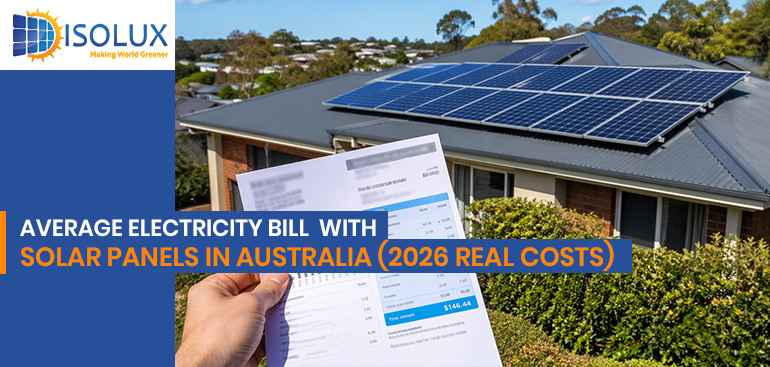

Understanding your electricity bill in Australia has never been more important. In 2026, power prices continue to rise, and many homeowners are paying significantly more than they need to. The national average residential electricity rate now sits between 30 and 35 cents per kilowatt-hour (kWh), depending on your state, retailer and tariff type.
A typical Australian household uses roughly 18 to 20 kWh of electricity per day. At current rates, that adds up to between $2,200 and $2,500 per year in usage charges alone, before daily supply fees are factored in.
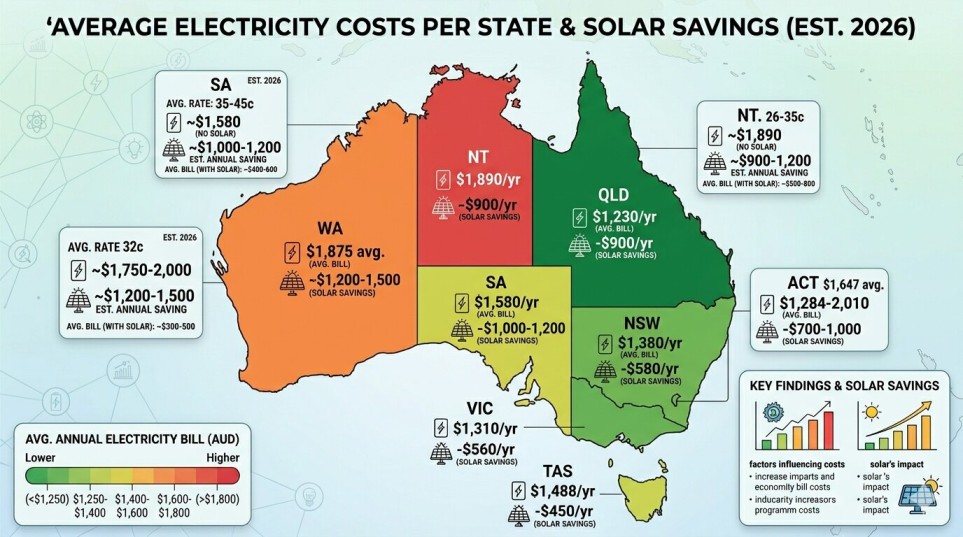
⚡ Key Stat: Without solar, the average quarterly electricity bill in Australia is around $399, or approximately $1,596 per year. South Australia is the most expensive state, averaging $1,580 per year.
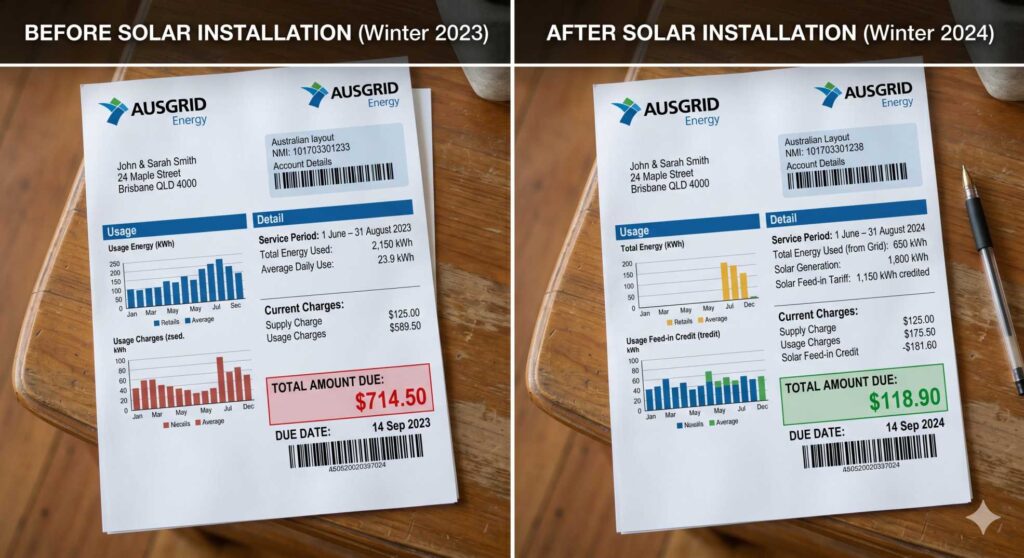
However, for Australian homeowners who have installed solar panels, the story is very different. Solar energy reduces how much electricity you buy from the grid. Therefore, your bill drops substantially. In some cases, it can fall close to zero.
This guide breaks down the real 2026 numbers – what you pay without solar, what you pay with solar, and how quickly a solar system pays for itself across every major Australian state.
How Much Is the Average Electricity Bill in Australia With Solar?
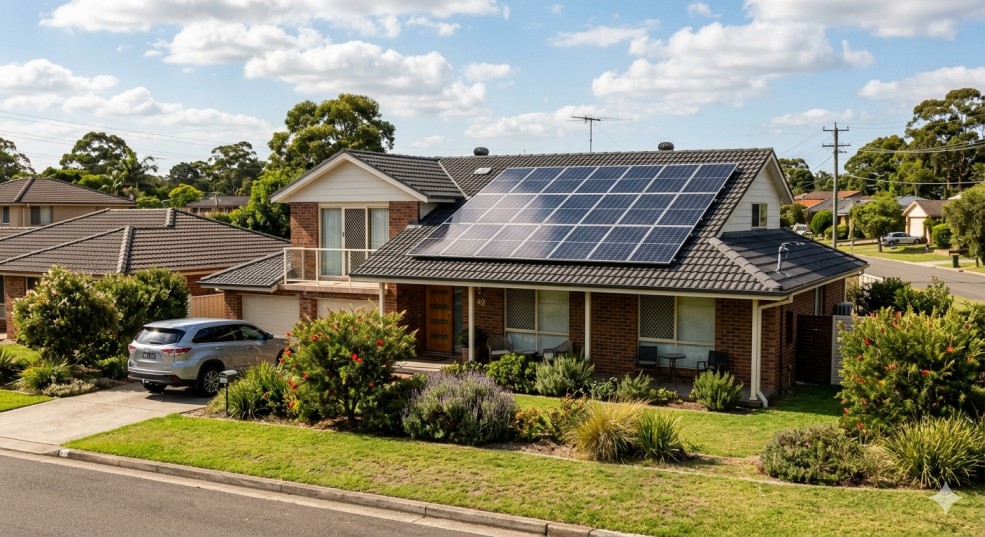
The difference solar makes to your electricity bill is significant. The average Australian home with a solar panel system pays around $26 per month for electricity, compared to roughly $133 per month without solar. That is a saving of more than $1,200 per year for many households.
However, these figures vary widely based on your location, system size, and how much solar energy you use directly during the day. The key concept here is self-consumption: the solar electricity you use in your home saves you the full grid rate (30–35c/kWh). Energy you export back to the grid earns you a much smaller feed-in tariff, typically only 5–8c/kWh in 2026.
💡 Why self-consumption matters: Using 1 kWh of solar energy at home saves you about 32 cents. Exporting that same kWh to the grid earns you only 5–8 cents. That is up to a 6x difference. Therefore, running your appliances during the day maximizes your savings.
Electricity Bill in Australia: State-by-State Comparison
The electricity bill in Australia varies significantly between states. This is due to different electricity grids, tariff structures, renewable energy mixes, and network infrastructure costs. Here is a comprehensive breakdown of average annual electricity bills with and without solar, based on 2026 data.
| State / Territory | Avg. Annual Bill (No Solar) | Avg. Rate (c/kWh) | Avg. Annual Bill (With Solar) | Est. Annual Saving |
| South Australia (SA) | ~$1,580 | 35–45c | ~$400–$600 | ~$1,000–$1,200 |
| New South Wales (NSW) | ~$1,380 | 30–38c | ~$400–$650 | ~$800–$1,000 |
| Western Australia (WA) | ~$1,750–$2,000 | 32c (Synergy flat) | ~$300–$500 | ~$1,200–$1,500 |
| Queensland (QLD) | ~$1,230 | 28–34c | ~$300–$500 | ~$700–$900 |
| Victoria (VIC) | ~$1,310 | 24–32c | ~$380–$600 | ~$700–$900 |
| Tasmania (TAS) | ~$1,488 | 26–34c | ~$500–$700 | ~$700–$900 |
| ACT | ~$1,284–$2,010 | 24–30c | ~$350–$600 | ~$700–$1,000 |
| Northern Territory (NT) | ~$1,890 | 26–35c | ~$500–$800 | ~$900–$1,200 |
South Australia consistently records the highest electricity prices in the country. This means solar panels deliver some of the strongest financial returns there. Western Australia also presents a compelling case, with Synergy’s flat 32c/kWh tariff and excellent solar irradiance making payback periods among the fastest in the nation.
How System Size Affects Your Electricity Bill
The size of your solar system is the single biggest factor in how much your electricity bill drops. A larger system generates more energy, covers more of your daily usage, and leads to bigger savings. Here is how popular system sizes compare across Australia in 2026.
| System Size | Typical Installed Cost (After Rebates) | Avg. Daily Generation | Best Suited For | Est. Annual Saving |
| 5 kW | $4,000–$6,000 | 18–20 kWh/day | 1–2 person home | $1,000–$1,400 |
| 6.6 kW (Most Popular) | $4,500–$8,000 | 24–28 kWh/day | 3–4 person home | $1,200–$2,000 |
| 10 kW | $8,000–$10,500 | 36–40 kWh/day | Large family / EV | $2,000–$3,000 |
| 13 kW+ | $11,000–$15,000 | 46–52 kWh/day | High-usage / pool | $2,500–$4,000+ |
The 6.6 kW system remains Australia’s most popular choice in 2026. It generates enough energy to cover most of a typical household’s daytime consumption and costs between $4,500 and $8,000 after federal rebates. At current electricity prices, most 6.6 kW systems save homeowners between $1,200 and $2,000 per year.
As a simple rule of thumb, budget approximately $1,000 per kW installed for a quality system from a reputable installer. Larger systems generally offer a better price-per-watt, as fixed costs such as labour and mounting hardware are spread across more panels.
Also Read: How Much Does 6.6kW Solar System Cost in Australia?
Understanding the Solar Payback Period
What Is the Payback Period?
The solar payback period is simply how long it takes for your electricity bill savings to cover the upfront cost of your solar system. After that point, every dollar your system saves is pure financial gain, for 20 or more years.
In 2026, the average payback period for a well-designed residential solar system in Australia is between 3 and 7 years, depending on your state, system size, and how you use energy. According to the Clean Energy Regulator, the average payback across the country has shrunk to around 3.5 years for many systems, thanks to rising electricity prices.
Payback Period Formula
Payback Period = Net System Cost ÷ Annual Electricity Savings
Example: A 6.6 kW system costs $6,000 after the STC rebate.
It saves you $1,500 per year on your electricity bill.
$6,000 ÷ $1,500 = 4.0 years payback
After that, 20+ more years of free electricity savings continue.
Read the Full Guide Here: Solar Panel Payback Period Australia 2026: How Long to Break Even?
Payback Period by State (6.6 kW System, 2026)
| State | Typical System Cost (After Rebates) | Est. Annual Savings | Typical Payback Period |
| Western Australia (Perth) | $4,750–$6,170 | $1,850–$2,100 | 3–4 years |
| South Australia | $5,000–$7,000 | $2,000–$3,000 | 2.5–4 years |
| Queensland | $4,500–$7,000 | $1,500–$2,200 | 4–5 years |
| New South Wales | $5,500–$8,000 | $1,800–$2,200 | 4–5 years |
| Victoria | $5,500–$7,500 | $1,300–$1,800 | 4–6 years |
| Tasmania | $5,500–$8,000 | $1,200–$1,600 | 5–7 years |
✅ Good news for WA homeowners: Perth averages 8 peak sun hours per day – significantly more than Sydney (4.5–5 hrs) or Melbourne (4–4.5 hrs). Combined with Synergy’s 32c/kWh flat tariff and competitive installer pricing, Perth enjoys some of Australia’s fastest payback periods.
Real-Life Calculation Examples by City
Example 1: Sydney Family Home (NSW)
Consider a four-bedroom family home in Parramatta with a quarterly electricity bill of $550 – that is $2,200 per year. They install a 6.6 kW solar system for a net cost of $6,000 after the federal STC rebate.
Their system generates around 9,500 kWh per year. They self-consume 40% of this (3,800 kWh) and export the rest. At 38c/kWh saved, self-consumption avoids $1,444 in grid costs. Exporting 5,700 kWh at 7c/kWh earns a further $399 in feed-in credits. Total annual savings: approximately $1,840 per year.
Sydney Payback Calculation
$6,000 ÷ $1,840 = 3.26 years payback
After 3.3 years, the system generates free savings for 21+ more years.
Over 25 years, total estimated savings: $45,000+ (accounting for rising electricity prices).
Example 2: Perth Home (Western Australia)
A three-bedroom home in Perth installs a 6.6 kW system for $5,500 after STCs. Perth’s exceptional 8 peak sun hours per day means the system generates approximately 10,200 kWh per year. With 50% self-consumption at Synergy’s 32c/kWh rate, the household avoids $1,632 in grid costs. Exporting 5,100 kWh at the Distributed Energy Buyback Scheme (DEBS) rate of around 5c earns $255. Total annual savings: approximately $1,887 per year.
Perth Payback Calculation
$5,500 ÷ $1,887 = 2.9 years payback
Households with higher daytime usage can see payback in under 3 years.
This is one of the fastest paybacks anywhere in Australia.
Read the Full Guide: How Much Do Solar Panels Cost in Perth?
Example 3: Melbourne Home (Victoria)
A couple in Melbourne installs a 6.6 kW system for $6,500 after rebates. Melbourne receives fewer sun hours than Perth or Brisbane. However, the system still generates around 8,400 kWh per year. At 50% self-consumption and a 28c/kWh grid rate, the household saves $1,176 on avoided grid costs and earns approximately $294 from exports (at 7c/kWh). Total annual saving: approximately $1,470 per year.
Melbourne Payback Calculation
$6,500 ÷ $1,470 = 4.4 years payback
Victoria also offers an additional state rebate of up to $1,400 for eligible households, which can reduce payback below 4 years.
Feed-In Tariffs: What You Earn for Exporting Solar
A feed-in tariff (FiT) is the rate your electricity retailer pays you for surplus solar energy you export back to the grid. In 2026, Australian feed-in tariffs have fallen significantly from the premium rates of a decade ago. Understanding your FiT is an important part of calculating your total solar savings.
| State | Minimum FiT (c/kWh) | Competitive FiT Range | Key Notes |
| NSW | No mandated minimum | 7–12c/kWh | Some retailers offer time-varying rates |
| Victoria | ~5–6c/kWh | 5–10c/kWh | Single and time-varying plans available |
| Queensland | ~6–8c/kWh | 6–12c/kWh | Strong retailer competition |
| South Australia | ~5c/kWh | 5–10c/kWh | Battery storage greatly improves returns |
| Western Australia | 2.25c–10c/kWh | DEBS: 2.25c off-peak / 10c 3–9pm | WA time-varying DEBS rewards afternoon export |
Western Australia’s Distributed Energy Buyback Scheme (DEBS) is one of Australia’s most established time-varying FiT systems. It pays 10c per kWh for solar exported between 3pm and 9pm, when grid demand is highest.
Therefore, WA homeowners with west-facing panels that generate more in the afternoon earn significantly more than those with traditional north-facing setups.
⚠️ Important Reminder: With retail electricity at 30–45c/kWh and feed-in tariffs at only 5–12c/kWh, self-consumption saves up to 6–8 times more than exporting. Focus on using your solar energy at home – run dishwashers, washing machines, and pool pumps during daylight hours.
Government Rebates and Incentives in 2026
Government rebates significantly reduce the upfront cost of going solar, directly shortening your payback period. Here is an overview of the key incentives available to Australian homeowners in 2026.
Federal: Small-Scale Technology Certificates (STCs)
Australia’s primary solar incentive is the Small-scale Renewable Energy Scheme (SRES), which provides STCs as an upfront discount on your installation. In 2026, the STC rebate is worth approximately $3,000 to $4,000 on a 6.6 kW system, depending on your postcode and current STC market prices. Your installer typically handles the paperwork and applies the discount directly to your quote.
The rebate reduces in value each year through to 2030, so acting sooner secures you a higher discount. The good news is that solar panel prices have been decreasing at roughly the same rate, keeping overall system costs stable.
State-Level Rebates
| State | Key Rebate / Program | Value | Notes |
| Victoria | Solar Homes Solar Panel Rebate | Up to $1,400 | Eligibility criteria apply |
| Victoria | Battery & VPP rebate | Up to $1,400 | Combined solar + battery |
| Western Australia | Residential Battery Scheme | Up to $1,300 | For battery storage addition |
| All States | Cheaper Home Batteries Program (Federal) | ~$3,000–$4,500 off | Applied as STC discount on batteries |
It is also worth noting that the federal Cheaper Home Batteries Program underwent significant changes in May 2026. Eligible homeowners can receive approximately $3,000 to $4,500 off a standard 13.5 kWh battery via the STC mechanism. This has made adding battery storage considerably more attractive.
Also Read: How Much Does a Solar Battery Storage System Cost

Factors That Affect Your Solar Savings and Electricity Bill in Australia
Two homes on the same street can install the same solar system and end up with very different results. Several factors influence how much your electricity bill drops after going solar.
1. Self-Consumption Rate
This is the most important variable. The more solar energy you use directly at home, the more you save. Households that use 60% or more of their generated solar power achieve payback 12 to 18 months faster than those who export most of it. Running appliances during daylight hours – 10am to 3pm – is the single most effective habit change you can make.
2. Roof Orientation and Shading
North-facing panels receive the most sunlight throughout the day in Australia. However, west-facing panels are increasingly popular in states like WA, where afternoon export rates are higher. Even partial shading from a tree or chimney can noticeably reduce output. A good installer will assess your roof thoroughly before recommending a layout.
3. System Quality and Inverter Choice
Budget panels typically lose around 10% efficiency over 25 years, while premium panels from brands like REC, SunPower, or Tindo degrade only about 5%. The inverter is also critical – it converts DC solar power to AC electricity that your home can use. A cheaper inverter may break down around the 5-year mark, adding unexpected costs. Choosing a quality inverter from brands such as Fronius or Sungrow is a wise long-term investment.
4. Local Electricity Tariff
The higher your electricity rate, the more valuable each kWh of solar energy becomes. South Australians, who pay Australia’s highest electricity prices at around 35–45c/kWh, therefore benefit the most from solar self-consumption.
5. Household Energy Usage Patterns
Families who work from home, have a swimming pool, or charge an electric vehicle during the day will naturally consume more solar energy. This leads to faster payback and larger overall savings.
Top Tips to Improve Your Solar ROI and Reduce Your Electricity Bill
Getting solar installed is the first step. However, how you use your system determines whether you get average results or exceptional results. Here are the most effective ways to maximize your solar return on investment.
Shift Appliance Use to Daylight Hours
Run the dishwasher, washing machine, and clothes dryer between 10 am and 3 pm. This is when your panels produce the most power. It is completely free electricity.
Pre-Cool or Pre-Heat Your Home
Use your air conditioner to set the desired temperature during peak solar hours. This reduces the expensive grid power needed in the evening. Your home stays comfortable without the high cost.
Monitor Your System Performance
Use your inverter’s monitoring app to track daily generation. Identifying underperformance early prevents months of lost savings. Many systems also alert you to faults automatically.
Compare Energy Retailers Regularly
Feed-in tariffs and import rates vary enormously between retailers. Switching to a better plan can add hundreds of dollars in annual savings without changing a single panel.
Consider Adding a Battery
A solar battery stores excess daytime generation for use at night. With 2026 federal rebates reducing battery costs by $3,000–$4,500, the financial case for batteries has never been stronger.
Keep Panels Clean
Dust, bird droppings, and debris reduce panel efficiency. A gentle clean once or twice a year, particularly after summer dust storms or pollen season, keeps output at its peak.
Does Adding a Battery Help Your Electricity Bill?
Solar batteries have moved from a luxury item to a mainstream financial strategy for many Australian households in 2026. The core reason is the growing gap between what you pay for grid electricity (30–45c/kWh) and what you receive for exported solar energy (5–8c/kWh).
Every kWh you store in a battery and use at night saves you approximately 30–40 cents. Exporting that same kWh earns you only 5–8 cents. This 6x value difference is the primary financial engine of battery storage.
Battery Payback Period
After the federal Cheaper Home Batteries Program discount, a standard 10–13.5 kWh battery typically costs between $8,500 and $12,000 fully installed. The payback period for most Australian homes currently sits between 5 and 10 years. High-consumption households, or those in states with aggressive incentives, can achieve break-even in as little as 3 to 4 years.
🔋 The 2026 Sweet Spot: The best battery capacity for most homes is 10–14 kWh. This covers typical evening usage without overspending on capacity that rarely gets used. Going larger increases upfront costs faster than it increases savings, potentially extending your payback period.
If you already have a solar system and are paying significant evening electricity bills, adding a battery is worth a detailed financial assessment. Contact the team at ISOLUX Solar for a personalized battery analysis based on your actual consumption data.
Frequently Asked Questions
How much is the average electricity bill in Australia with solar in 2026?
The average Australian home with a solar panel system pays approximately $26 per month, compared to around $133 per month without solar. This equates to a saving of roughly $1,200 to $2,000 per year, depending on system size, location, and self-consumption habits.
Can solar panels eliminate my electricity bill?
Solar panels can dramatically reduce your bill, but most households still receive a small bill to cover the daily supply charge (the fixed fee to remain connected to the grid), which typically ranges from 80c to $1.20 per day. This is unavoidable unless you go completely off-grid with a large battery system.
What is the best solar system size for an average Australian home?
For a three to four-person household using 18–22 kWh per day, a 6.6 kW system is the most popular and cost-effective choice in 2026. Larger families, EV owners, or those with a pool should consider 10 kW or more.
How long does a solar system last in Australia?
Quality solar panels are warrantied for 25 years and often continue performing well beyond that. Most systems fully pay for themselves in 3 to 7 years, delivering 18 to 22 years of largely free electricity after the payback point.
Does solar work in cloudy or rainy weather?
Yes. Solar panels generate electricity from daylight, not direct sunlight. They produce less on overcast days, but they still produce meaningful energy. Australia’s solar irradiance is among the highest in the world, and even Melbourne’s variable weather allows effective solar generation year-round.
Is 2026 still a good time to go solar in Australia?
Absolutely. Rising electricity prices mean solar systems pay back faster than ever. The federal STC rebate still provides significant savings, though it decreases each year towards 2030. The longer you wait, the more you pay in electricity bills and the lower the rebate becomes. Acting in 2026 is a smart financial decision for most homeowners.
Get a personalised solar quote from ISOLUX Solar. We handle your STC rebate paperwork, design the right system for your home, and back every installation with our workmanship guarantee.