
Solar panels are one of the smartest investments an Australian homeowner can make. Once installed, they quietly generate clean energy for decades with very little intervention required. However, “very little” does not mean “none.” One of the most overlooked aspects of solar panel ownership in Australia is keeping the panels clean. The cost of neglecting this simple task is higher than most people realise.
At Isolux Solar, we have been installing and servicing solar panel systems across Greater Sydney and NSW since 2013. One of the most common questions our customers ask after installation is: “How do I clean my solar panels, and how often do I need to do it?” This complete step-by-step guide answers every aspect of that question in detail, covering everything from the right tools and the safest technique to location-specific cleaning schedules and the situations where you should call a professional rather than attempting it yourself.
Whether you have a brand-new 6.6 kW rooftop system or a large commercial installation, this guide has you covered. It gives you the practical knowledge to keep your solar panels performing at their best for years to come.
Why Cleaning Your Solar Panels Actually Matters
Solar panels work by absorbing sunlight through a tempered glass surface and converting it into electricity using photovoltaic cells underneath. The entire process depends on maximum light reaching the cells. Anything sitting on the surface of the glass – whether that is dust, bird droppings, pollen, leaf debris, or a combination of all four – blocks a portion of that light and directly reduces the amount of electricity your system produces.
The relationship between cleanliness and performance is not a minor technicality. It is a measurable, financially significant factor that affects your electricity bill every single day your panels are dirty.
Think of it this way. You would not cover half your windows with newspaper and expect your home to be as bright inside. The same principle applies to solar panels. Every layer of grime sitting on the surface is essentially a partial shade cloth over your investment. In a country where electricity costs in NSW now average 35 to 40 cents per kilowatt-hour, a reduction in solar output has a direct dollar impact.
Beyond efficiency, there is also a long-term consideration. Certain contaminants – particularly bird droppings – are acidic in nature. When left on the glass surface of a solar panel for extended periods, they can cause micro-etching that permanently damages the anti-reflective coating on the panel surface. This kind of damage is not covered under most manufacturer warranties because it is considered a maintenance failure rather than a product defect. Keeping your panels clean is therefore not just about maximising output today. It is also about protecting a long-term asset worth thousands of dollars.
How Dirty Solar Panels Affect Energy Output: The Real Numbers
The performance impact of dirty solar panels is well-documented. Research and real-world monitoring data consistently show that a build-up of grime on solar panels can reduce energy output by anywhere from 5% to 30%, depending on the severity of the soiling, the type of contaminant, and the local environment.
In standard suburban conditions, a light accumulation of dust over several months might reduce output by 5% to 10%. That sounds modest. But on a 6.6 kW system generating approximately 9,500 kWh per year in Sydney, a 10% reduction represents roughly 950 kWh of lost generation. At 38 cents per kWh, that is approximately $361 in lost savings every year – all from not cleaning your panels.
In areas with higher soiling rates, such as homes near busy roads, industrial areas, construction sites, or farms, the impact is considerably greater. Studies from Australian conditions have found soiling losses of 15% to 25% are not uncommon in dusty inland regions, particularly during summer when rainfall is sparse and dust storms are possible.
Bird droppings present a specific and outsized problem compared to general dust. Because a dropping is concentrated and opaque rather than diffuse like dust, it creates what is known as a “hot spot” on the panel. The affected cells stop generating current, but the current from neighbouring cells is still forced through them, generating heat. Infrared thermal imaging of soiled panels shows affected areas reaching temperatures exceeding 85°C. At these temperatures, panel degradation accelerates, and in severe cases, the laminate layer can delaminate or cells can crack.
This is why a single bird dropping left untreated for months can cause more damage than a panel covered in light dust. Addressing visible spot contamination promptly matters just as much as your regular cleaning schedule.
How Often Should You Clean Solar Panels in Australia?
The Clean Energy Council and Solar Victoria both recommend that solar panel systems be professionally serviced at least every two years. Within that service cycle, however, the cleaning frequency for the panels themselves depends on your specific circumstances rather than a universal schedule.
For most suburban homes in Sydney, Melbourne, Brisbane, or Perth with panels installed at a tilt angle of 15 degrees or more, rainfall does a reasonable job of removing light dust accumulation. Under these conditions, a thorough manual clean once every 12 months is generally sufficient to maintain strong performance. Some homeowners in areas with reliable year-round rainfall find they can extend this to every 18 months without a significant performance penalty.
Factors That Affect How Frequently You Need to Clean
Several environmental and installation factors influence how quickly your panels accumulate performance-reducing soiling.
Panel tilt angle is one of the most significant variables. The Clean Energy Council requires a minimum tilt of 10 degrees for grid-connected solar installations, partly because this minimum angle allows rainfall to run across the panel surface and carry loose dust away. Panels installed at 15 degrees or more benefit substantially from natural rain cleaning. Panels installed at angles below 10 degrees, or flat on a low-pitch roof, do not shed water effectively. Rainwater pools on the surface, evaporates, and leaves a concentrated residue of dissolved minerals and dirt that is much harder to remove than simple dry dust.
Proximity to pollution sources accelerates soiling considerably. A home located next to a highway, a busy intersection, a construction site, or an industrial facility will accumulate oily particulates and sticky residues on panel surfaces far more quickly than a home in a quiet residential street. The same applies to homes near farms, where dust from field cultivation or fine-grain particles can coat panels rapidly.
Tree coverage affects both the type and quantity of debris. A home surrounded by eucalyptus, jacaranda, or deciduous trees will deal not only with fallen leaves and twigs on the panels but also with sticky sap deposits, pollen, and bird activity attracted by the trees. Each of these contaminants adheres differently to the panel surface and requires a different level of attention.
Local wildlife presents its own cleaning challenge. Seagulls near coastal areas, cockatoos and rainbow lorikeets in many suburban areas, and starlings in inner-city regions are all prolific panel soilers. Homes with active bird roosts nearby may need to clean panels monthly during peak seasons rather than annually.
Cleaning Frequency by Location in Australia
Understanding how your location affects cleaning needs helps you set a realistic schedule rather than guessing.
In coastal Sydney, Newcastle, and Wollongong, the combination of sea salt air and regular rainfall creates a moderate soiling environment. Salt deposits can accumulate on panels, particularly within two kilometres of the coastline, and while rainfall helps, the salt residue left behind after water evaporation is mildly corrosive. These homeowners typically benefit from cleaning every six to twelve months.
In western Sydney, Penrith, and the outer metropolitan fringe, dust from ongoing construction and suburban development is a constant presence. Panels in these areas often benefit from cleaning every four to six months, particularly during dry summer periods when dust settles heavily.
In rural and regional NSW – areas such as the Hunter Valley, Riverina, Central West, and Tablelands – agricultural dust, bushfire smoke residue, and long dry periods between rainfall events all combine to create challenging soiling conditions. Annual cleaning is a minimum, and quarterly cleaning may be warranted during dry seasons or near cultivated land.
In Melbourne and Victoria’s coastal regions, moderate rainfall and relatively clean suburban air mean annual cleaning is usually adequate. In regional Victoria, particularly in irrigation areas and grain-growing regions, more frequent attention is needed.
In Brisbane and Southeast Queensland, tropical rainfall during the wet season does an excellent job of natural panel cleaning from November to March. However, the dry season from June to September sees rapid dust build-up, and panels in this region benefit from a thorough clean at the end of each dry season.
How to Tell When Your Solar Panels Need Cleaning
You do not always need to climb a ladder or call a professional to know whether your solar panels need cleaning. There are several reliable indicators you can check without leaving the ground.
The most direct method is visual inspection from ground level. Stand back and look up at your panels on a clear day when the sun is at an angle that makes the surface visible. Visible brown or grey patches, white streaks (from dried water or bird dropping residue), or a general dull appearance compared to when the panels were new are all signs that cleaning is overdue.
Performance monitoring through your inverter app is an equally reliable indicator and one that does not require any visual access to your roof at all. If you notice your system’s daily generation has dropped noticeably compared to the same period in previous months – adjusting for seasonal differences and recent weather – soiling is one of the most likely explanations. For example, if your 6.6 kW system consistently generated 25 to 30 kWh on clear September days last year but is now only producing 20 to 22 kWh under similar conditions, cleaning should be your first investigation step before assuming a technical fault.
After specific weather events, a visual check is worthwhile. Dust storms deposit a visible ochre-coloured layer on panel surfaces. Bushfire smoke leaves a fine oily residue that is particularly difficult for rain to remove. After heavy storms, leaf litter and organic debris can accumulate in panel frame channels, where moisture retention promotes moss and algae growth over time.
What Equipment Do You Need to Clean Solar Panels?
One of the reassuring things about solar panel cleaning is that you do not need specialist equipment for a standard residential DIY clean. The correct tools are inexpensive and likely similar to items you already have at home.
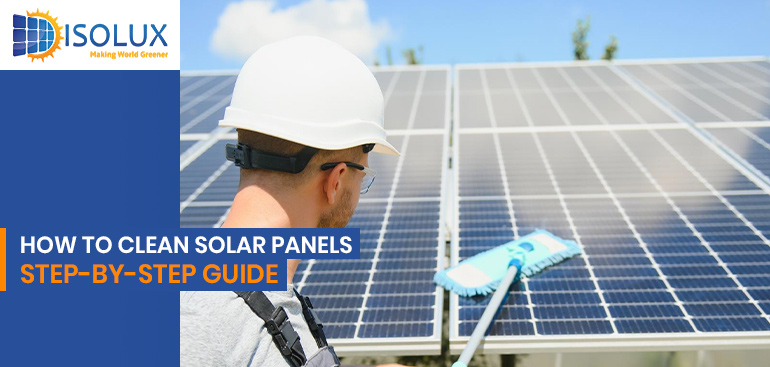
The essential items for a safe and effective solar panel clean are a soft-bristled brush with a long extension handle, a non-abrasive sponge or microfibre cloth, a squeegee with a rubber blade, a bucket, clean water (preferably low-mineral content or rain water if your mains water is very hard), and a standard garden hose with a gentle spray nozzle.
Clean water is more important than most homeowners realise. In areas with hard tap water – which includes much of western Sydney, regional NSW, and parts of Queensland – tap water contains dissolved calcium and magnesium minerals. When this water evaporates from the panel surface, it leaves white mineral deposits called limescale. These deposits are not immediately harmful, but they are difficult to remove and accumulate with each wash if you are using hard water without drying the panels afterwards.
If your tap water is noticeably hard, either use a squeegee to remove water from the panel surface immediately after rinsing, or invest in a basic water filter to reduce mineral content before use.
A mild, pH-neutral soap or dishwashing liquid diluted heavily in water can be used for particularly stubborn grime. However, plain water is sufficient for the majority of routine cleaning situations and avoids any risk of residue. You should never use harsh chemicals, solvents, bleach, or abrasive detergents on solar panels under any circumstances, as these can strip the anti-reflective coating from the panel glass and cause permanent damage that reduces both performance and lifespan.
You should not use a pressure washer to clean solar panels. The high-pressure jet can force water into the frame seals, damage the wiring beneath the panels, crack the tempered glass under stress, or dislodge the panels themselves if they are not properly anchored.
Safety First: What You Must Do Before You Start Cleaning
Before you touch a solar panel or pick up a hose, safety must be your first priority. Solar panel systems generate high-voltage DC electricity whenever they are exposed to light – including on overcast days – and the risks of working near live electrical components at height are serious.
The most important safety rule for residential solar panel cleaning is to keep your feet on the ground at all times. The vast majority of DIY cleaning tasks can be completed safely from the ground using extension handles. Getting onto a roof to clean solar panels introduces significant fall risk and should only be done by professionals who have appropriate safety harnesses, roof anchor points, and non-slip footwear. According to Safe Work Australia, falls from heights are one of the leading causes of serious injury and death in Australian workplaces and homes. No amount of solar panel cleaning is worth that risk.
Before beginning any cleaning, shut down your solar system using the shutdown procedure described in your system’s user manual. For most systems, this involves switching off the solar supply main switch on your switchboard, followed by the inverter’s DC isolator. The shutdown sequence for your specific system will be outlined in the documentation provided by your installer at handover. If you are unsure of the procedure, contact your solar installer before proceeding.
Choose an appropriate time of day for cleaning, which we cover in the step-by-step section below. Avoid cleaning panels when it is windy, as extension handles become difficult to control and debris can blow back into your eyes. Do not clean panels after rain while the roof or surrounding surfaces are still wet, as the ground underfoot may be slippery.
Check your solar panel warranty documentation before cleaning. Some manufacturers specify that cleaning must be carried out in a particular way or by certified personnel to maintain warranty validity. While most warranties allow for standard DIY cleaning with appropriate tools and materials, knowing your specific terms before you start protects your investment.
Step-by-Step Guide: How to Clean Solar Panels at Home
With your equipment assembled and safety precautions in place, here is the complete step-by-step process for cleaning your solar panels effectively.
Step 1 – Choose the Right Time of Day
The best time to clean solar panels is either early morning or late afternoon, avoiding the middle of the day when panels are hot from direct sun exposure. This timing recommendation is not arbitrary. When cold water from a hose or bucket contacts a solar panel that has been heating in full summer sun for several hours, the sudden thermal shock can cause micro-cracks in the tempered glass. These cracks may be invisible to the naked eye but can propagate over time and eventually compromise the panel’s structural integrity and performance.
Early morning is particularly ideal because overnight dew softens any dried debris on the panel surface, making it easier to remove without heavy scrubbing. The panels are also cool from the night, and you have the full daylight hours ahead to check your work. Avoid cleaning in direct midday sun not only for the thermal shock reason but also because the water evaporates too quickly from the hot surface, leaving streaks before you can squeegee it away.
Overcast days are also an acceptable time to clean, as panels are naturally cooler and there is no risk of thermal shock. However, you will need slightly more light to visually inspect your work afterwards.
Step 2 – Turn Off Your Solar System
Before applying any water to your panels, complete the shutdown procedure for your system. Switch off the solar supply main switch on your switchboard first, then switch off the inverter’s DC isolator. Wait two minutes after shutting down before beginning cleaning, as some inverters take a short time to fully discharge. If you are uncertain about the shutdown procedure for your specific system, contact Isolux Solar and we will walk you through the correct process.
Step 3 – Remove Loose Debris First
Before applying any water, use your soft-bristled brush on an extension handle to gently sweep away any dry, loose debris from the panel surface. This includes leaves, dust, small twigs, feathers, and any material that has settled in the frame channels at the panel edges.
Removing dry debris before introducing water is important because wetting dry dust turns it into mud that is far more difficult to shift and can leave streaks. Sweeping dry debris away first also reduces the amount of physical scrubbing required in later steps, minimising the risk of scratching the glass surface.
Work from the top edge of the panel downward in smooth, gentle strokes. Do not press hard or scrub aggressively at this stage. The goal here is simply to clear loose surface material, not to remove embedded grime.
Step 4 – Rinse the Panels With Water
Using your garden hose with a gentle spray nozzle – never a pressure washer – apply a light rinse of clean water across the full panel surface. Start at the top and work down so that water carrying loosened dirt runs downward and away from the areas you have already rinsed.
The purpose of this initial rinse is to saturate and loosen any remaining dry dust and light grime before the scrubbing step. It also reveals any stubborn spots – bird droppings, sap, heavy mud – that will need additional attention.
Keep the water stream gentle. You are rinsing, not power-washing. A light spray that runs across the panel surface is entirely sufficient. If you cannot reach the panels with your hose from ground level, a garden hose extension wand, available from most hardware stores for under $30, provides the additional reach needed for single and most double-storey homes.
Step 5 – Gently Scrub With a Soft Sponge or Squeegee
Dip your non-abrasive sponge or microfibre cloth into a bucket of clean water – with a small amount of mild dish soap added if there is stubborn grime – and gently work across the panel surface using circular motions. Keep the pressure light. You should not be pressing the sponge firmly against the glass. The idea is to lift grime away with the sponge rather than grind it against the surface.
For bird droppings and other hardened deposits, do not attempt to scrape them off dry. Soak them first by placing a wet cloth over the deposit for two to three minutes to soften it, then gently wipe away with your sponge. In most cases, this approach removes even firmly dried droppings without any scratching. If the deposit is particularly stubborn, a small amount of isopropyl alcohol on the sponge can dissolve organic residue effectively without leaving any surface damage or residue.
Work methodically from the top of the panel to the bottom, covering the full surface in overlapping passes so no area is missed. Pay particular attention to the inner edges of the panel frame, where dust and debris tend to accumulate and where moisture can sit long enough to promote algae growth.
Step 6 – Rinse Again and Let Dry
After scrubbing, apply a final rinse with clean water to remove all soap residue and loosened grime. As with the initial rinse, work from top to bottom. Ensure all soap is removed, as dried detergent residue can attract dust more quickly and may affect the panel’s anti-reflective coating over time.
If your tap water is hard, use your squeegee to draw the water off the panel surface immediately after the final rinse, before it has a chance to evaporate and leave mineral deposits. A good rubber-bladed squeegee with an extension handle draws cleanly across the panel glass and leaves a streak-free finish.
If you are using soft or filtered water, you can allow the panels to air-dry naturally without squeegeeing. Do not use any cloth to dry the panel surface by wiping, as this can introduce fine lint particles or micro-scratches from a cloth that is not perfectly clean.
Step 7 – Inspect the Panels After Cleaning
Once the panels are dry, take a few minutes to inspect them from the ground for any areas you may have missed, any remaining residue, and any physical damage that may have been hidden under the grime layer before cleaning.
Look for any cracks, chips, discolouration, or delamination on the panel surface. Check the panel frames for any corrosion, cracking, or loose mounting hardware. Check the condition of any visible wiring at the underside of the panel where it enters the conduit run on the roof. If you notice anything unusual, photograph it and contact your installer or a CEC-accredited electrician for assessment before turning the system back on.
Once you are satisfied that everything is in good order, turn your system back on by reversing the shutdown procedure: switch on the inverter DC isolator first, then the solar supply main switch on your switchboard. Your inverter should display normal operation within a few minutes.
How to Clean Solar Panels on a Single-Storey vs Double-Storey Home
The approach to cleaning differs meaningfully depending on your home’s roof height and configuration.
For a single-storey home, most cleaning tasks are achievable from the ground using an extension handle long enough to reach your roof panels. A standard six-metre telescopic extension pole – available from hardware stores for $30 to $60 – provides sufficient reach for the majority of single-storey homes, allowing you to brush, sponge, and squeegee without leaving the ground.
For a double-storey home or a particularly steep single-storey roof, ground-level cleaning becomes more challenging and the temptation to get onto the roof increases. Isolux Solar strongly advises against this. A double-storey roofline puts you working at heights above five metres, where a fall is almost certainly fatal or seriously injuring. In this situation, a professional solar panel cleaning service with appropriate safety equipment is the correct choice. The cost of a professional clean – typically between $150 and $350 for a standard residential system – is negligible compared to the risk of a serious fall injury. We discuss the professional cleaning option in detail later in this guide.
How to Clean Bird Droppings Off Solar Panels
Bird droppings deserve specific attention because they are both the most damaging common contaminant and the one that most homeowners mishandle when trying to remove them.
The key mistake is attempting to scrape or wipe dried droppings off a dry panel surface. Bird droppings contain uric acid, grit, seeds, and other hard particles. Dragging these across the panel glass dry is essentially sanding it. The resulting micro-scratches reduce the panel’s light transmission and are permanent.
The correct method is to soak the dropping before touching it. Place a wet sponge or cloth directly over the dropping and hold it there for two to three minutes. The water softens the deposit, and in most cases it will then wipe away cleanly with a gentle circular motion using a soft sponge. For very dried or heavily caked droppings, a ten-minute soak with a cloth moistened with water may be required before the material loosens enough to remove safely.
If the dropping has been sitting on the panel for a long time and has started to chemically etch the glass surface beneath it, the visible damage may remain even after the material is removed. This is a strong argument for addressing bird droppings promptly rather than waiting for the next scheduled clean.
If birds are a persistent problem on your roof – which is common in areas with high cockatoo, pigeon, or seagull populations – anti-bird mesh or wire installed around the panel frames prevents birds from roosting beneath the panels and significantly reduces the frequency and volume of droppings on the panel surface. Ask your Isolux Solar consultant about bird-proofing options at the time of installation or during your next service visit.
What Not to Do When Cleaning Solar Panels
Knowing what to avoid is just as important as cleaning them properly. Simple mistakes can damage your panels and reduce their performance.
Do not use a pressure washer or strong water spray, as it can crack the glass and damage internal parts. Avoid rough cleaning tools like steel wool or hard brushes because they can scratch the surface.
Stay away from harsh chemicals such as bleach or ammonia. These can damage the protective coating on the panels and lower their efficiency.
Do not clean panels during very hot, sunny hours. Cold water on hot panels can cause small cracks over time.
Avoid climbing onto the roof unless you have proper safety equipment. It can be dangerous and lead to serious injury.
After cleaning, always check your system’s performance using the inverter or app. If there is no improvement, there may be another issue that needs professional help.
Does Rain Clean Solar Panels? The Truth for Australian Homes
This is one of the most common misconceptions among solar panel owners in Australia, and it deserves a clear, honest answer. Rain does help clean solar panels, but it does not replace manual cleaning, particularly in the Australian context.
Rain is most effective at cleaning solar panels when the panels are installed at a tilt angle of 15 degrees or more and when the rain is reasonably heavy and sustained. Under these conditions, the water flow across the panel surface is strong enough to dislodge and carry away loosely attached dust. After a good heavy shower, a freshly dusted panel can return to near-original cleanliness.
However, drizzle and mist – which are common in Sydney’s autumn and Melbourne’s year-round climate – do not clean panels effectively. This type of rainfall wets the dust on the panel surface without generating enough water flow to carry it away. When the water evaporates, the dissolved dust and atmospheric pollutants are left behind as a residue that is actually harder to remove than the original dry dust.
Bird droppings, sap, and chemical residues from industrial air pollution are not removed by rain at all. Their adhesive properties are sufficient to resist the shear force of water flowing across the panel surface under gravity. These contaminants require physical cleaning regardless of how much rain falls.
The practical conclusion for Australian homeowners is to use rain as a supplement to your cleaning schedule, not as a replacement for it. After a substantial rainfall, take a few minutes to inspect your panels from the ground. If they look visually clean and your inverter app confirms strong performance, your scheduled clean can be deferred. If visible residue remains or performance is still below expectation, proceed with a manual clean.
Flat Roof Solar Panels: Why They Need More Frequent Cleaning
Homes with low-pitch or flat roofs present a specific solar panel cleaning challenge that homeowners in this situation need to understand clearly.
When solar panels are installed on a flat or near-flat roof, water does not run freely across the surface. Instead, it pools on the panel glass. As this pooled water evaporates under the Australian sun, it concentrates all of its dissolved minerals, dust, and pollutants into a dense residue that effectively cements onto the panel surface. The Clean Energy Council specifically mandates a minimum panel tilt of 10 degrees for grid-connected systems precisely to allow enough natural water runoff to reduce this problem, but even at 10 degrees the self-cleaning effect is significantly weaker than at 20 or 30 degrees.
If your home has a flat or low-pitch roof and your panels are installed at a low angle, you should clean them significantly more frequently than the standard annual schedule. Every three to four months is a more appropriate target in this configuration, and you will likely need to use a mild detergent solution rather than plain water to cut through the cemented mineral residue that accumulates between cleans.
A practical tip for flat-roof panel owners is to install drain clips on the lower edges of the panel frames. These small plastic clips break the surface tension of pooled water, creating a drainage path over the panel edge and significantly reducing the residue problem between manual cleans.
DIY Solar Panel Cleaning vs Hiring a Professional
For most Australian homeowners with single-storey homes and panels installed at a reasonable tilt, DIY cleaning is a perfectly adequate and cost-effective approach. However, there are specific circumstances where professional cleaning is the safer and more appropriate choice.
When to Clean Solar Panels Yourself
DIY cleaning is appropriate when your home is single-storey and you can reach the panels safely from the ground with an extension handle. It is also suitable when the soiling is light to moderate – standard dust accumulation, light pollen, and recent bird droppings that have not been sitting for an extended period. If you are comfortable with the shutdown procedure for your system and confident in using a hose and extension handle safely, a DIY clean once or twice a year is a perfectly reasonable maintenance approach.
When to Call a Professional Solar Panel Cleaner
Professional cleaning is the right choice when your home is double-storey or has a steep roof that puts the panels out of safe reach from the ground. It is also appropriate when your panels have not been cleaned for an extended period and have significant soiling or hardened residue that requires a more systematic approach than a standard hose-and-sponge clean. After bushfire smoke events, which deposit a particularly stubborn oily residue, professional cleaning with appropriate detergents is often more effective than DIY methods.
If you notice physical damage to your panels during a visual inspection – cracks, discolouration, delamination, or frame corrosion – professional attention is required before any cleaning takes place, as cleaning damaged panels can worsen the damage or create safety risks.
Solar Victoria recommends engaging a professional solar cleaning service that uses full safety equipment, does not stand on or place anything on top of the panels, and uses gentle cleaning methods without harsh chemicals. Always check that any professional cleaner you engage is aware of and compliant with your panel manufacturer’s warranty terms for third-party cleaning.
How Much Does Professional Solar Panel Cleaning Cost in Australia?
Professional solar panel cleaning in Australia typically costs between $150 and $400 for a standard residential system, depending on the number of panels, the height and accessibility of the roof, the location, and the degree of soiling. Most cleaning companies charge a flat rate per visit rather than per panel, so larger systems do not cost proportionally more.
When comparing quotes, check whether the service includes a post-clean system performance check, panel inspection for physical damage, and a cleaning certificate for warranty purposes. Some solar installation companies – including Isolux Solar – offer combined service and cleaning packages where the panel clean is included as part of a biennial system service. This is often the most cost-effective approach, as the inspection and cleaning are completed in a single visit.
Solar Panel Cleaning and Your Warranty: What You Need to Know
Most solar panel manufacturers include maintenance requirements in their warranty terms, and failing to adhere to these requirements can affect your ability to make a successful warranty claim. Understanding what your warranty covers before cleaning is worth a few minutes of your time.
The most common warranty-related cleaning requirements specify that panels must not be cleaned with abrasive materials, harsh chemicals, or high-pressure water. They also typically require that any professional cleaning be carried out by a qualified person using appropriate equipment. Some premium brands – including REC Group and SunPower – specify that cleaning with a mild, pH-neutral detergent is acceptable but that bleach, acid-based cleaners, and solvent-based products will void the product warranty if damage results from their use.
It is worth noting that the anti-reflective coating on modern Tier 1 solar panels is a specific warranty-covered component in many cases. If this coating is damaged by incorrect cleaning, a claim can be made – but only if the cleaning was carried out correctly. Using the wrong materials shifts responsibility for the damage to the homeowner, regardless of whether the product itself was defective.
If you are unsure about your specific panel warranty requirements, contact Isolux Solar. We can advise on the cleaning standards applicable to whichever panel brand you have installed, ensuring your maintenance approach supports rather than undermines your warranty coverage.
How to Monitor Solar Panel Performance After Cleaning
Cleaning your solar panels only delivers their full value if you confirm the result through performance monitoring. The best way to do this is through your inverter’s monitoring app – whether that is the Tesla app for Powerwall users, SolarEdge’s monitoring platform, Sungrow’s iSolarCloud, or the monitoring interface provided by your inverter brand.
After cleaning, give the system a full clear day of operation and then compare the day’s generation total to the same date in the previous year, adjusting for any differences in weather. Most inverter monitoring apps display historical generation data that makes this comparison straightforward.
If cleaning was effective, you should see generation return to seasonal norms. A 6.6 kW system in Sydney on a clear March day, for example, should generate between 26 and 32 kWh depending on exact conditions. If your post-clean generation still falls materially short of this benchmark on a clear day, there may be an underlying technical issue that cleaning alone cannot address.
Performance issues that persist after cleaning are most commonly caused by shading from new growth in nearby trees, a faulty string due to a damaged panel, an ageing inverter operating below specification, or grid export limitations imposed by your distributor. If your monitoring shows persistent underperformance after a thorough clean, contact Isolux Solar to arrange a system health check.
For more detailed guidance on reading your inverter app and understanding your system’s performance data, speak with the Isolux Solar team at your next service visit.
Additional Solar Panel Maintenance Tips to Keep Your System Running Well
Cleaning the panel surface is the most visible aspect of solar maintenance, but it is part of a broader care routine that keeps your entire system performing safely and efficiently for its full 25-year lifespan.
Solar Victoria recommends a comprehensive system service by a licensed CEC-accredited electrician at least every two years. This service goes well beyond cleaning to include testing of all electrical connections and cables, inspection of the mounting hardware for corrosion or loosening, a thorough visual inspection of every panel for micro-cracks, delamination, or discolouration, inverter performance testing, and an anti-islanding protection check.
Keep an eye on your inverter between services. The inverter is the brain of your solar system and the component most likely to show early warning signs of problems. Most modern inverters display a status light or error code when something is not right. If you notice a red light, a flashing warning code, or an unexpected shutdown, do not ignore it. Contact your installer promptly, as early diagnosis of inverter issues often prevents costly failures.
Manage shading proactively. Trees grow, and what was an unobstructed roof at the time of installation may have developed partial shading as surrounding vegetation has matured. If you notice a progressive decline in your system’s output over several years that cannot be explained by panel soiling, new shading from tree growth is a common cause. Trim trees that overhang or shade your panels regularly, taking care to comply with any council regulations regarding tree removal or trimming in your area.
Check for bird nesting under your panels annually. Pigeons and common mynas in Sydney frequently nest in the sheltered space between solar panels and the roof surface. Nesting material is a fire risk in summer and can damage wiring. Anti-bird mesh installed during panel cleaning prevents nesting without harming birds and is a worthwhile addition for any home in a populated suburban area.
For more detailed guidance on maintaining your solar system beyond cleaning, read our Solar Panel Maintenance Guide and our comprehensive Solar Panel Cleaning overview.
Frequently Asked Questions About Cleaning Solar Panels
How often should I clean my solar panels in Australia?
For most suburban homes with panels tilted at 15 degrees or more, a thorough clean once every 12 months is sufficient. Homes in dusty areas, near busy roads, industrial sites, or with heavy bird activity should clean every three to six months. Flat-roof installations should clean every three to four months regardless of location.
Can I use a pressure washer to clean solar panels?
No. A pressure washer can crack the tempered glass, compromise the frame seals, damage wiring connections, and void your panel warranty. Always use a standard garden hose with a gentle spray nozzle, or a soft brush with water from a bucket.
What is the best time of day to clean solar panels?
Early morning or late afternoon, when panels have cooled from the midday sun. Cleaning hot panels with cold water risks thermal shock micro-cracking. Morning is ideal because overnight dew softens dried debris, making it easier to remove.
Will rain clean my solar panels?
Heavy rainfall on tilted panels does provide some natural cleaning of loose dust. However, light rain concentrates dirt rather than washing it away, and bird droppings, sap, and chemical residue are not removed by rain at all. Rain supplements but does not replace manual cleaning.
Is it safe to clean solar panels myself?
Yes, provided you stay on the ground at all times and use appropriate extension tools. Getting onto a roof to clean panels is dangerous and is not recommended for homeowners without professional safety equipment.
Does cleaning solar panels really make a difference to output?
Yes, significantly. Depending on the level of soiling, cleaning can restore 5% to 30% of lost output. For a typical 6.6 kW system in Sydney, a 10% soiling loss represents approximately $361 in lost annual savings at current electricity rates.
Can I use dish soap to clean my solar panels?
A small amount of mild, pH-neutral dish soap diluted in water is acceptable for stubborn grime. Plain water is sufficient for routine cleaning. Do not use detergents containing bleach, citrus extracts, or strong degreasers, as these can damage the panel’s anti-reflective coating.
How much does professional solar panel cleaning cost in Australia?
Between $150 and $400 for a standard residential system, depending on the number of panels, roof height, and location. Combined service-and-clean packages from your installer often represent the best value.
Do I need to turn off my solar system before cleaning?
Yes. Always follow your system’s shutdown procedure before applying any water to your panels. The shutdown sequence is in your system’s user manual. Contact Isolux Solar if you are unsure of the correct procedure for your system.
How do I remove bird droppings from solar panels?
Soak the dropping with a wet cloth for two to three minutes to soften it, then gently wipe away with a soft sponge using circular motions. Never attempt to scrape dried droppings off dry glass, as this will scratch the surface.
Conclusion
Solar panels are a long-term investment that continues to deliver returns for 25 years or more, but only if they are properly maintained. Cleaning is the simplest, most affordable, and most directly impactful maintenance task an Australian solar panel owner can perform. It requires no specialist skills, no expensive equipment, and less than an hour of your time for a typical residential system.
The financial case is clear. A 6.6 kW system in Sydney generating its full potential over 25 years, with regular cleaning maintaining near-peak performance throughout, will save its owner considerably more in electricity costs than the same system that is persistently soiled and generating 10% to 15% below its potential. When you factor in rising electricity prices and the continued decline of feed-in tariff rates – making self-consumption increasingly valuable – every kilowatt-hour you recover through clean panels has a direct positive impact on your household budget.
At Isolux Solar, we encourage every customer to treat panel cleaning as a routine part of their home maintenance calendar, on the same level as gutters, air conditioning filters, and smoke alarm testing. Set a reminder for the same date each year. Check your inverter data seasonally. Address visible soiling – particularly bird droppings – promptly rather than waiting for your scheduled clean.
If you have questions about your specific system’s cleaning requirements, if you would like to discuss a combined service and cleaning appointment, or if you are ready to explore adding battery storage or expanding your existing solar system, the Isolux Solar team is always available to help.
Book a Solar System Service or Get a Free Quote from Isolux Solar