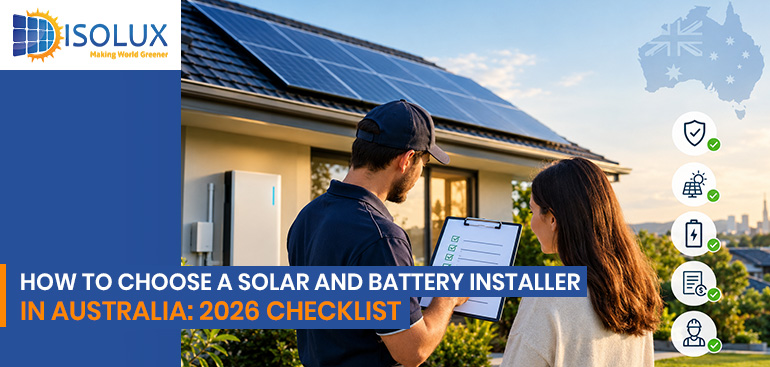

Choosing the right Solar Installer in Australia starts with checking accreditation, electrical licensing, installation experience and warranty support. A reliable installer should also provide a detailed quote and explain your system’s expected performance.
In 2026, choosing a solar and battery installer requires more than comparing prices. Homeowners must also understand battery rebate eligibility, switchboard requirements and backup capabilities.
This Solar Installation Checklist explains what to check before signing a contract.
Why Choosing the Right Solar Installer Matters in 2026
Solar panels and batteries are long-term investments. Poor system design can reduce savings, create safety concerns and increase maintenance costs.
For example, an oversized battery may cost more without delivering worthwhile additional savings.
Similarly, an unsuitable inverter may limit battery performance or future expansion.
A qualified installer should assess your roof, electricity consumption, existing wiring and future energy needs.
Therefore, choosing experienced professionals matters as much as selecting reliable equipment.
How to Check a Solar Installer’s Licence and Accreditation
Before hiring a Solar Installer, verify their electrical licence and professional accreditation.
In Australia, Solar Accreditation Australia (SAA) manages accreditation for solar and battery designers and installers.
Installers must hold the appropriate accreditation for the work they perform.
Check Solar Accreditation Australia Credentials
Ask for the name and accreditation number of the person responsible for your installation.
You can verify their credentials through the official SAA website.
Remember, accreditation applies to individuals, not automatically to every employee of a solar company.
Check Electrical Licensing
Electrical installation work must comply with relevant state or territory licensing requirements.
For example, a business installing solar systems in NSW should use appropriately licensed electrical professionals.
For battery installations, confirm the installer holds the required SAA battery accreditation. Also check whether the retailer participates in the New Energy Tech Consumer Code (NETCC).
Choose a Solar and Battery Installer With Relevant Experience
Not every Solar Installer has the same experience with battery storage.
Some specialise in rooftop solar. Others regularly install hybrid inverters, batteries and blackout backup systems.
Ask whether the company has completed installations similar to your property.
For example, adding a battery to an existing solar system can involve different requirements from a new installation.
An experienced Battery Installer in Australia should understand inverter compatibility, switchboard capacity and backup circuit design.
Additionally, request examples of completed projects and recent customer feedback.
What Should a Solar Installation Quote Include?
A detailed quote makes comparing Solar Installers easier.
It should identify the solar panel, inverter and battery brands, models and capacities.
The proposal should also explain expected electricity generation and estimated savings. Importantly, savings estimates should reflect your electricity usage, tariffs and solar export arrangements.
Check the Complete Installation Price
A transparent quote should explain installation labour, equipment, rebates and potential additional costs.
For example, an older property may require a switchboard upgrade before battery installation.
Ask whether this work is included or charged separately.
Network connection requirements, monitoring equipment and backup circuits should also be clearly explained.
Avoid signing a contract based only on the advertised package price.
Check Solar Panel, Inverter and Battery Warranties
Solar equipment usually includes different warranties for different components.
Solar panels may have separate product and performance warranties.
Inverters and batteries also have manufacturer warranties with specific conditions.
Battery warranties may include limits on years, energy throughput or remaining capacity.
Therefore, compare warranty terms rather than focusing only on the advertised duration.
Who Handles Warranty Claims?
Ask whether the installation company provides local after-sales support.
Also confirm who handles faults, replacement equipment and warranty claims.
For example, a manufacturer warranty may cover a faulty component but exclude some labour costs.
A reliable installer should explain these conditions before installation.
Solar Installation Checklist: Safety, Switchboards and Backup Power
A professional installation begins with checking whether your property can safely support the proposed system.
The electrician should assess the switchboard, electrical protection and existing wiring.
Battery placement also matters. Australian installation requirements address location, access, protection and safety clearances.
Confirm Battery Backup Capabilities
Not every solar battery automatically supplies electricity during a blackout.
Some systems require additional equipment and dedicated backup circuits.
For example, you may want refrigeration, lighting and internet equipment to operate during outages.
Ask which circuits will receive backup power and how long the battery could support them.
Your installer should explain these limitations before installation.
How to Compare Solar Installers Without Choosing on Price Alone
A cheaper quote does not always represent better value.
One company may include premium equipment, switchboard work and ongoing support.
Another may exclude these services.
Compare the proposed system design, product specifications, warranties and installation responsibilities.
Customer reviews can also help identify patterns in communication and after-sales service.
However, avoid relying only on star ratings. Look for detailed feedback from verified customers.
Solar Battery Rebates in 2026: What Should Your Installer Explain?
Australia’s Cheaper Home Batteries Program provides eligible battery installations with an upfront discount.
The program changed on 1 May 2026, including adjustments to how discounts apply across battery capacities.
Eligible systems must meet government requirements for approved products, installation and capacity.
Battery systems generally require a nominal capacity between 5kWh and 100kWh.
However, rebate support applies only to eligible usable capacity, subject to current program rules.
Ask your installer to show the discount separately on the quote.
They should also confirm whether your proposed battery and installation meet eligibility requirements.
What Questions Should You Ask a Solar Installer Before Signing?
Before paying a deposit, ask who will complete the installation and whether they hold current accreditation.
Confirm the exact equipment models and whether substitutions require your approval.
You should also ask about installation timelines, network approvals and possible additional electrical work.
For battery systems, confirm blackout functionality, usable capacity and monitoring options.
Finally, clarify warranty responsibilities and who to contact if something goes wrong.
These questions can prevent misunderstandings after installation.
Final Solar Installation Checklist for Australian Homeowners
Use this checklist when comparing solar and battery installation quotes.
| What to check | What to confirm |
| Accreditation | Current SAA accreditation for the relevant work |
| Electrical licence | Valid state or territory licence |
| Installation experience | Relevant solar and battery projects |
| Equipment | Exact brands, models and specifications |
| System design | Suitable capacity and site-specific layout |
| Safety | Switchboard, wiring and battery placement |
| Rebates | Eligibility and itemised discount |
| Warranties | Product, installation and service coverage |
| Backup power | Supported circuits and limitations |
| Final quote | Total costs and possible exclusions |
A trustworthy installer should answer these questions clearly without pressuring you into an immediate decision.
Conclusion
The best Solar Installer is a properly licensed and accredited professional who provides transparent pricing, suitable system design and reliable after-sales support.
Before choosing a Battery Installer in Australia, verify accreditation, compare quotes and review warranty conditions.
Also confirm battery rebate eligibility, electrical safety requirements and blackout backup capabilities.
Taking these steps helps protect your investment and supports better long-term solar performance.
At Isolux, we help Australian homeowners explore solar and battery solutions suited to their electricity needs.
Contact Isolux to discuss your solar and battery installation requirements.