
As Australian households continue to face rising electricity prices and grid uncertainty, solar batteries are no longer seen as a luxury—they’re becoming a practical part of modern energy planning. Among the growing list of battery brands available in Australia, Dyness has emerged as a popular option, especially for homeowners looking for flexibility, safety, and value without paying premium-brand prices.
In this Dyness Battery Review Australia, we take a calm, installer-informed look at how Dyness batteries perform in real Australian conditions. Rather than sales hype, this review focuses on what matters most to homeowners: reliability, lifespan, pricing, inverter compatibility, and whether Dyness is genuinely a good long-term choice for Australian solar systems.
About Dyness Brand
Dyness is an international energy storage manufacturer specialising in lithium battery solutions for residential, commercial, and industrial use. While Dyness may not yet have the household-name recognition of Tesla or LG, it has built a solid global footprint across Europe, Asia, Africa, and Australia.
In the Australian market, Dyness has gained traction because it focuses on practical battery design rather than flashy marketing. Its systems are modular, relatively affordable, and built around lithium iron phosphate (LiFePO₄) chemistry—a technology widely regarded as one of the safest options for home energy storage.
For many Australian homeowners, Dyness sits comfortably in the “sensible middle ground”: more robust and expandable than budget batteries, yet significantly more affordable than premium all-in-one systems.
Dyness Battery Models Available in Australia
It offers modular lithium battery systems, and in Australia the following models are most commonly specified:
Dyness BX Series (High-Voltage Residential Range)
This is the most popular Dyness range in Australia, especially for homes using hybrid inverters.
- BX48100
- BX51100
- BX51100A
- BX48100 + BX BDU (Battery Distribution Unit)
These batteries are stackable and typically configured to create systems ranging from around 7 kWh up to 40+ kWh, depending on household needs and inverter limits.
Dyness A48100 / A48100H (Low-Voltage Models)
Used in specific system designs where low-voltage batteries are required.
- A48100
- A48100H
These models are less common than the BX series but are still used in compatible inverter setups.
Dyness Tower / Stackable Systems
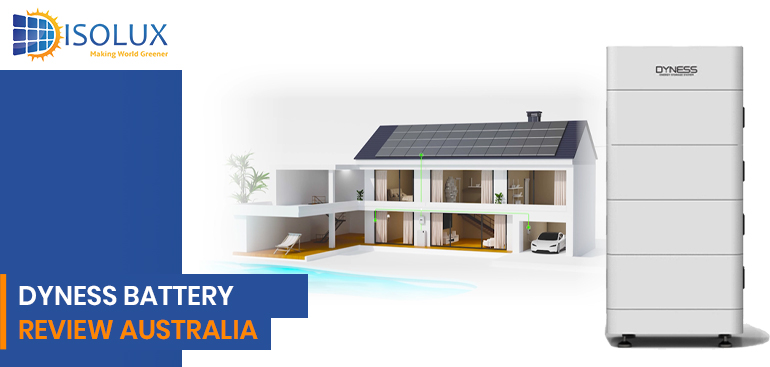
In Australia, Dyness batteries are often installed as stacked tower systems, allowing:
- Easy capacity expansion
- Clean indoor installation
- Flexible system sizing for future EV or load growth
(The exact naming may vary slightly by distributor, but they are based on BX modules.)
Dyness Commercial & Larger Capacity Models (Limited Residential Use)
These are available in Australia but are generally used for commercial or industrial projects, not typical homes:
- Dyness PowerRack Series
- Dyness DL Series
Battery Technology: Why Dyness Uses LiFePO₄
All Dyness residential batteries use lithium iron phosphate (LiFePO₄) chemistry. While this chemistry has slightly lower energy density than some lithium-ion alternatives, it offers three major advantages that are particularly relevant in Australia:
First, LiFePO₄ batteries are thermally stable, meaning they handle high ambient temperatures better. This is critical in Australian climates, where summer heat can stress lesser battery chemistries.
Second, LiFePO₄ batteries have a longer cycle life, translating into more years of usable energy storage with less degradation.
Third, they are widely regarded as one of the safest lithium battery types for residential installations, with a much lower risk of thermal runaway.
From an installer’s perspective, this chemistry choice makes Dyness a conservative but sensible option—especially for families prioritising safety and longevity over maximum compactness.
Performance in Australian Conditions
In real-world Australian use, Dyness batteries perform best when paired with a well-designed solar system and a compatible hybrid inverter. Their efficiency is consistent, and they are well-suited to daily cycling, which is common in Australian households aiming to maximise self-consumption.
In hot climates such as NSW, Queensland, and parts of Western Australia, Dyness batteries benefit from proper installation placement—typically shaded or indoor locations where possible. When installed correctly, they maintain stable performance even during prolonged summer heat.
For most grid-connected homes, Dyness batteries comfortably handle evening energy demand, overnight essentials, and partial blackout protection when paired with suitable inverters.
Capacity, Scalability, and Household Fit
One of the strongest arguments in favour of Dyness batteries is scalability. Instead of forcing homeowners to guess their future energy needs upfront, Dyness systems allow capacity to grow over time.
For small households with modest evening usage, a smaller Dyness setup may be sufficient to cover lighting, refrigeration, and basic appliances overnight. Medium-sized families often expand their systems to support air conditioning, cooking, and entertainment loads. High-energy users—particularly those planning EV charging—can scale Dyness systems further as needs evolve.
This flexibility makes Dyness particularly attractive to Australian homeowners who want control over costs without sacrificing future options.
Inverter Compatibility in Australia
Dyness batteries are compatible with a wide range of hybrid inverters commonly used in Australia. This is an important advantage, as inverter flexibility allows installers to design systems around the home’s specific electrical layout rather than forcing a single-brand ecosystem.
Dyness batteries are typically used in DC-coupled hybrid systems, which are more efficient for new solar installations or major system upgrades. While they are not usually positioned as AC-coupled retrofit batteries, they work very well when installed as part of a thoughtfully designed solar-plus-battery system.
At Isolux Solar, inverter compatibility and system integration are always assessed carefully, as battery performance is only as good as the system design supporting it.
Warranty, Lifespan, and Degradation
When evaluating a home battery, warranty terms and real-world lifespan matter far more than headline capacity numbers. Below is a clear, data-backed explanation of how Dyness batteries perform over time in Australian conditions.
Warranty Coverage in Australia
Dyness residential batteries supplied in Australia typically come with a 10-year manufacturer warranty. While exact terms can vary slightly by distributor and model, the standard warranty structure includes:
- Product warranty: 10 years
- Performance warranty: Capacity retention guaranteed over the warranty period
- Throughput / cycle-based protection: Ensures the battery meets minimum performance benchmarks when cycled daily
Most Dyness warranties guarantee that the battery will retain at least 70% of its original usable capacity at the end of 10 years, provided it is installed and operated within specified conditions.
This warranty level places Dyness in line with well-established mid-to-premium battery brands available in Australia.
Expected Lifespan
Dyness batteries use Lithium Iron Phosphate (LiFePO₄) chemistry, which is known for long cycle life and slow degradation.
Under normal Australian residential usage:
- Design lifespan: 10–15 years
- Cycle life: ~6,000 cycles (at recommended depth of discharge)
- Daily cycling: Suitable for one full cycle per day
For a typical Australian household using the battery daily for self-consumption, this translates to well over a decade of reliable operation, assuming correct system design and installation.
Homes with moderate energy usage and good thermal conditions may see Dyness batteries remain functional even beyond the warranty period, albeit at reduced capacity.
Degradation Rates (What Happens Over Time)
Battery degradation is gradual and unavoidable, but Dyness batteries degrade at a controlled and predictable rate due to their chemistry and conservative operating limits.
Typical degradation profile:
- Years 1–3: Minimal noticeable degradation
- Years 4–7: Slow, linear capacity reduction
- Years 8–10: Capacity approaches the warranty floor (≈70%)
On average, Dyness batteries experience around 2–3% capacity loss per year, which is considered very good performance for residential lithium batteries operating in daily cycles.
Dyness Battery Price in Australia
For many Australian homeowners, Dyness stands out as a value-driven solar battery—offering reliable lithium iron phosphate technology without the premium pricing of big-name brands. Below is a clear, installer-level breakdown of Dyness battery pricing in Australia, including what affects the final installed cost.
Dyness Battery Price Range
Dyness batteries are modular, so pricing depends on how many battery modules are installed and the type of inverter used.
Indicative price ranges (installed):
- 7–10 kWh system: AUD $6,000 – $8,000
- 10–15 kWh system: AUD $8,000 – $11,000
- 15–20 kWh system: AUD $11,000 – $14,000
- 20+ kWh systems: AUD $14,000+
These prices typically include:
- Dyness battery modules
- Battery management unit (BDU)
- Hybrid inverter (if required)
- Standard installation and commissioning
Actual pricing may vary based on state, installer, and site conditions.
Cost Per kWh (Value Comparison)
Dyness batteries generally fall into the mid-range cost-per-kWh bracket in Australia:
- Approx. $700 – $900 per usable kWh (installed)
This positions Dyness as:
- Cheaper than Tesla Powerwall on a per-kWh basis
- Comparable to BYD systems
- More expensive than entry-level budget batteries (but significantly better on warranty and longevity)
Installation and Maintenance Considerations
Dyness batteries are relatively straightforward to install when handled by experienced, CEC-accredited installers. Their modular design allows flexible placement, although indoor or well-shaded locations are generally preferred for thermal stability.
Maintenance requirements are minimal. Like most modern lithium batteries, Dyness systems do not require regular servicing beyond software monitoring and occasional system checks. Monitoring platforms allow homeowners and installers to track performance, energy flow, and system health over time.
Pros and Cons of Dyness Batteries
Dyness batteries offer several clear advantages for Australian homeowners. Their modular design supports future expansion, LiFePO₄ chemistry enhances safety, and pricing remains accessible without falling into the “cheap and risky” category.
However, Dyness may not suit homeowners seeking a sleek, all-in-one premium battery with built-in inverter and advanced blackout features out of the box. It is also less suitable for simple AC-coupled retrofits compared to some premium alternatives.
In essence, Dyness is best suited to homeowners who value practical performance, flexibility, and value over branding.
Dyness vs Other Popular Batteries in Australia
When compared to premium batteries like Tesla Powerwall, Dyness is clearly positioned as a more modular and cost-effective alternative. While Powerwall offers a polished ecosystem and strong blackout performance, Dyness provides greater flexibility and lower upfront cost.
Compared with brands such as BYD and LG Energy Solution, Dyness competes closely on chemistry and scalability, often winning on price while offering similar long-term reliability when installed correctly.
The “best” battery ultimately depends on household goals, energy usage patterns, and budget—not just brand reputation.
Is Dyness a Good Battery Choice for Australian Homes?
For many Australian households, Dyness is a genuinely sensible battery option. It is particularly well-suited to families who want to start with a modest system and expand later, homeowners planning EV adoption, and those seeking long-term reliability without premium pricing.
Dyness may not be the right choice for everyone, but in the right system design, it delivers strong value and dependable performance.
Why Choose Isolux Solar for Dyness Battery Installation?
At Isolux Solar, we approach battery installations with a design-first mindset. Rather than pushing a single brand, we assess your household energy usage, roof layout, inverter compatibility, and future plans before recommending the most suitable battery solution.
Our experience with solar batteries across Australia ensures Dyness systems are installed correctly, safely, and optimised for long-term performance—not just short-term savings.
Conclusion
Thinking about adding a Dyness battery to your solar system or upgrading your existing setup? Isolux Solar design battery solutions based on how Australian homes actually use energy—not one-size-fits-all packages.
Our team will assess your electricity usage, solar capacity, inverter compatibility, and future plans to recommend the right Dyness battery size and configuration for long-term performance and value.
Speak to Isolux Solar today for a personalised Dyness battery quote and expert advice tailored to your home. Reduce your reliance on the grid, protect yourself from rising power prices, and make the most of your solar investment with confidence.