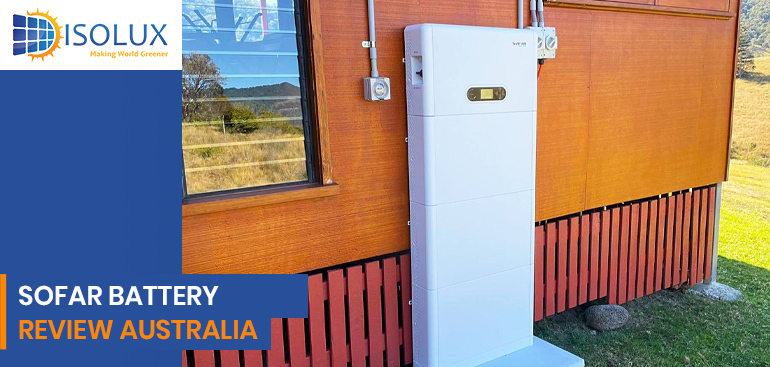

As electricity prices across Australia continue to rise and feed-in tariffs decline, solar batteries are no longer a “nice to have”—they’re becoming a strategic investment. Among the growing list of energy storage brands gaining attention is Sofar Solar, a manufacturer best known for its inverters and now steadily expanding its footprint in the Australian battery market.
This in-depth Sofar Solar Battery Review Australia is written from an installer-informed perspective, combining technical analysis, real-world performance insights, and Australian market realities. The goal is simple: help you decide whether a Sofar battery is the right long-term investment for your home.
Why Sofar Solar Batteries Are Getting Attention in Australia
Sofar Solar has built a solid reputation globally as an inverter manufacturer, particularly in Europe and Asia. In Australia, the brand has quietly gained traction among installers who value reliable performance at a competitive price point rather than flashy marketing.
Australian homeowners typically come across Sofar while comparing mid-range battery options—often alongside Tesla, BYD, and Sungrow. The appeal lies in a balance of affordability, safety-focused battery chemistry, and integration with hybrid inverter systems.
About Sofar Solar
Founded in 2013, Sofar Solar is a vertically integrated manufacturer specialising in solar inverters, hybrid systems, and energy storage solutions. The company operates globally, with installations in more than 100 countries and strong R&D investment.
In Australia, Sofar products comply with Clean Energy Council (CEC) requirements, making them eligible for standard grid-connected installations. While Sofar may not yet have the household name recognition of some premium brands, its technology base and manufacturing scale position it firmly as a serious contender in the energy storage space.
Sofar Solar Battery Technology Explained
Sofar Solar batteries sold in Australia use Lithium Iron Phosphate (LFP) chemistry. This is the same chemistry increasingly favoured across the industry due to its stability, safety, and long cycle life.
Unlike older lithium-ion variants, LFP batteries are less prone to overheating and thermal runaway—an important consideration in Australia’s hot climate. This makes Sofar batteries suitable for both indoor and outdoor installations when installed correctly.
Sofar batteries are typically paired with hybrid inverter systems, allowing solar generation, household consumption, grid interaction, and battery storage to work as a single, integrated ecosystem. This reduces energy losses and improves overall system efficiency.
Sofar Solar Battery Models Available in Australia
Sofar Solar follows a modular LFP battery architecture, meaning most systems can be expanded over time by adding battery modules. In Australia, the following models are the most commonly supplied and installed.
| Model Name | Usable Capacity (per module) | Expandable Capacity | Battery Chemistry | Typical Application |
| Sofar BTS 5K | ~5.12 kWh | Up to ~25.6 kWh (stackable) | Lithium Iron Phosphate (LFP) | Small to medium homes |
| Sofar BTS 10K | ~10.24 kWh | Modular (multi-stack systems) | LFP | Medium households |
| Sofar BTS 15K | ~15.36 kWh | Expandable with additional modules | LFP | Larger families, high evening usage |
| Sofar BTS 20K | ~20.48 kWh | Multi-stack configuration | LFP | High-consumption homes |
| Sofar PowerAll (HV Series) | Configurable (5–25 kWh+) | Yes (high-voltage system) | LFP | Premium residential & light commercial |
Performance in Australian Conditions
Battery performance on paper means little if it doesn’t hold up in real Australian conditions. Sofar batteries generally perform well in environments with high daily cycling, which is common in households aiming to maximise solar self-consumption.
In summer, Sofar’s LFP chemistry handles heat better than many traditional lithium-ion batteries, although correct installation and ventilation remain essential. Round-trip efficiency typically sits above 90%, which aligns with expectations for modern residential batteries.
From an installer perspective, Sofar systems are stable and predictable. They do what they’re designed to do without unnecessary complexity—an underrated advantage for long-term reliability.
Warranty, Lifespan & Degradation Explained
Warranty is one of the most important factors when evaluating a solar battery, particularly for Australian households expecting a return over 10–15 years.
Sofar Solar Battery Warranty Overview
| Warranty Component | Details |
| Product Warranty | 10 years |
| Performance Warranty | 10 years |
| Throughput / Cycle Guarantee | Up to ~6,000 cycles |
| End-of-Warranty Capacity | Typically 60–70% |
Sofar’s warranty structure is broadly in line with other mid-range battery brands. The key detail lies in the degradation clause. Like most manufacturers, Sofar does not guarantee zero degradation. Instead, it guarantees that the battery will retain a minimum usable capacity after a specified number of years or cycles.
In practical terms, this means gradual capacity loss is normal and expected. Under typical Australian household usage—one full cycle per day—Sofar batteries are designed to last well beyond their warranty period.
Sofar Solar Battery Price in Australia
One of Sofar’s strongest selling points is pricing. While costs vary based on system size, installation complexity, and location, Sofar batteries are generally positioned below premium brands while offering solid performance.
Typical Installed Price Ranges (Australia)
| Battery Size | Estimated Installed Price |
| 5–6 kWh | $6,500 – $8,000 |
| 10–12 kWh | $9,500 – $12,000 |
| 15–20 kWh | $13,500 – $17,500 |
These figures are indicative and can shift depending on whether backup power functionality is included, the type of inverter used, and site-specific electrical work. State-based incentives and rebates can also influence final pricing.
When assessed on a cost-per-kWh basis, Sofar batteries often represent strong value for money.
Installation Experience & System Compatibility
Sofar batteries are designed to integrate smoothly with Sofar hybrid inverters, though compatibility with other systems depends on configuration. For new solar installations, pairing a Sofar battery with a Sofar inverter simplifies design and reduces potential compatibility issues.
The monitoring platform is functional rather than flashy. It provides essential insights into solar production, battery usage, and grid interaction. While it may not match the polish of some premium apps, it delivers reliable, actionable data—which is what most homeowners ultimately need.
From an installer’s perspective, Sofar systems are straightforward to commission and maintain, which contributes to lower long-term service costs.
Pros and Cons of Sofar Solar Batteries
Sofar batteries excel in practicality rather than prestige. Their strengths lie in value, safety, and modular flexibility. They may not offer every premium feature on the market, but they cover the fundamentals well.
On the downside, brand recognition in Australia is still developing, and some homeowners may prefer a more established household name. Monitoring software, while reliable, is not the most advanced on the market.
For many households, these trade-offs are reasonable given the pricing advantage.
Sofar Solar vs Other Popular Batteries in Australia
Battery Comparison Snapshot
| Feature | Sofar Solar | Tesla Powerwall | BYD Battery-Box |
| Battery Chemistry | LFP | NMC | LFP |
| Modular Expansion | Yes | No | Yes |
| Typical Price Range | Mid | High | Mid–High |
| Warranty | 10 years | 10 years | 10 years |
| Best For | Value-focused homes | Premium ecosystems | Scalable systems |
Sofar competes most closely with BYD in terms of modularity and chemistry, while undercutting premium options like Tesla on price. For homeowners prioritising return on investment over brand prestige, Sofar often emerges as a compelling option.
What Australian Homeowners Are Saying
Feedback from Australian homeowners tends to be measured rather than extreme. Many users report stable performance, predictable savings, and satisfaction with day-to-day operation. Concerns usually centre on app usability or limited brand awareness rather than performance issues.
Importantly, most negative experiences can be traced back to system design or installation quality rather than the battery hardware itself—reinforcing the importance of choosing an experienced installer.
Is a Sofar Solar Battery Worth It in Australia?
For Australian households seeking a reliable, safe, and cost-effective solar battery, Sofar represents strong value. It is particularly well-suited to families with consistent evening energy usage, homes planning gradual system expansion, and those looking to reduce grid reliance without paying premium-brand prices.
Sofar may not be the best choice for homeowners seeking top-tier apps or brand prestige, but for practical, performance-driven buyers, it deserves serious consideration.
Expert Installer Insight from Isolux Solar
Isolux Solar assess batteries based on real-world outcomes, not marketing claims. Sofar batteries perform well when correctly sized and professionally installed. They are best suited to homeowners focused on self-consumption, long-term reliability, and value per kilowatt-hour.
A battery is only as good as the system it’s part of. Proper load analysis, inverter selection, and installation quality ultimately determine performance far more than brand alone.
Conclusion
Sofar Solar batteries may not dominate headlines, but they deliver where it matters: safety, performance, and value. For many Australian households, that combination makes them a smart and sensible investment.
If you’re considering a Sofar battery—or comparing it with other options Isolux Solar can provide a tailored assessment based on your energy usage, roof space, and long-term goals.
Speak with Isolux Solar today to find out whether a Sofar Solar Battery is the right fit for your home.