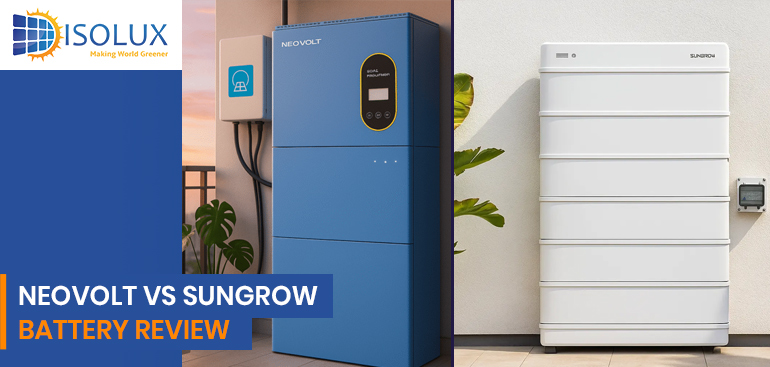
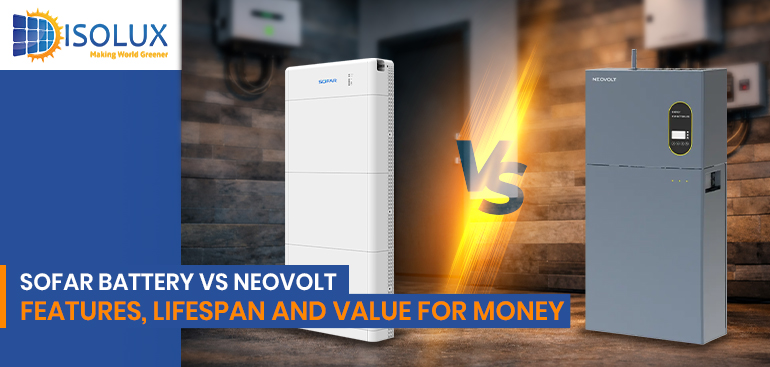

Many Australian homeowners now look for reliable batteries to lower bills and increase energy independence. Sofar and NeoVolt are two popular choices. Both brands use safe LFP technology and offer strong performance, yet each one suits different needs. This guide explains their key differences so you can choose the right battery for your home in New South Wales.
Quick Overview of Sofar and NeoVolt
Sofar began as an inverter manufacturer and later expanded into home battery storage. As a result, its batteries work well with a wide range of solar systems. The modular design also makes installation simple.
NeoVolt focuses on value and practicality. It offers modular batteries with competitive pricing and long cycle life. Because of this, many homeowners consider NeoVolt when they want strong performance at a lower cost.
Both brands continue to grow in Australia, especially in Sydney, Wagga Wagga, Wollongong and other NSW regions.
Battery Technology and Chemistry Explained for Homeowners
Sofar and NeoVolt use Lithium Iron Phosphate cells. LFP batteries have excellent thermal stability and a low fire risk. They also degrade more slowly than older lithium-ion types. Due to Australia’s hot climate, LFP batteries remain a safe and reliable choice for everyday use.
Design, Form Factor and Installation Ease
Sofar batteries use lightweight modules that fit well in tight spaces. This design helps installers complete tasks faster. It also benefits homeowners who have limited wall room.
NeoVolt batteries are modular too, and installers often find them simple to mount. The system fits most homes without major changes. If you want a clean layout and flexibility, NeoVolt and Sofar both meet those expectations.
Storage Capacity and Expansion Potential
Sofar offers stackable modules that allow you to upgrade capacity easily. As your energy needs grow, you can add more units.
NeoVolt follows the same approach. Its modules typically range from five to six kilowatt-hours. Because these units stack vertically, expansion becomes straightforward.
If you plan to add an electric vehicle or increase evening usage, both brands allow smooth growth.
Performance Metrics: Efficiency, Depth of Discharge and Output Consistency
Sofar batteries usually deliver over 90 percent round-trip efficiency. This means you keep more of the solar energy you store. NeoVolt offers similar efficiency levels.
Both brands also support a depth of discharge of up to 95 percent. As a result, you can use most of the battery’s capacity each day.
Performance also depends on the inverter. Good inverter pairing ensures steady charging and stable power output.
Lifespan and Degradation: What to Expect Over Time
Sofar and NeoVolt both claim long cycle life. In real Australian conditions, LFP batteries often last ten years or more. Proper installation helps the battery manage heat and maintain capacity.
NeoVolt focuses heavily on slow degradation. Sofar, meanwhile, builds strong battery management systems to protect cells. Both approaches support long-term reliability.
Value for Money: Upfront Cost and Total Cost of Ownership
NeoVolt usually costs less up front, making it attractive for budget-focused buyers. It delivers strong value per kilowatt-hour.
Sofar is slightly higher in price but offers excellent integration with a wide range of solar inverters. This flexibility can reduce installation complexity and long-term service needs.
To find the best value, compare capacity, warranty and compatibility with your existing system.
Compatibility with Inverters and Solar Systems in Australian Homes
Sofar batteries pair well with Sofar inverters and many other inverter brands. This makes the system ideal for retrofits.
NeoVolt also supports a wide list of inverters. However, homeowners should confirm model-by-model compatibility. When both the inverter and battery communicate well, the system performs better.
Safety Standards and Certifications for Australian Households
Both brands follow Australian safety guidelines and international certifications. LFP cells already provide a strong safety advantage. Proper installation, correct cabling and smart battery management add additional protection.
Homeowners should always choose an installer who follows Australian standards. Isolux Solar meets these compliance requirements.
You might also like: Sofar Solar Battery Review Australia
Sofar vs NeoVolt: Comparison
| Feature | Sofar Battery | NeoVolt Battery |
| Battery Chemistry | LFP (Lithium Iron Phosphate) | LFP (Lithium Iron Phosphate) |
| System Type | Modular, compact stackable modules | Modular stackable modules |
| Typical Module Size | ~5 kWh per module (model dependent) | ~5–6 kWh per module (model dependent) |
| Scalability | High, good for tight spaces | High, easy to expand gradually |
| Round-Trip Efficiency | Approximately 90–93% | Approximately 90–94% |
| Depth of Discharge | Up to 90–95% | Up to 90–95% |
| Cycle Life | 5,000–8,000+ cycles depending on model | 5,000–8,000+ cycles depending on model |
| Warranty | Commonly 10 years | Commonly 10 years |
| Price Category | Budget to mid-range | Budget to mid-range |
| Inverter Compatibility | Broad, including many third-party inverters | Broad, confirm per model |
| Ideal For | Retrofit installs with limited wall space | Homeowners seeking value and easy expansion |
| Australian Support | Growing distributor network | Growing distributor network |
Note that exact specs vary by model and firmware. Always confirm model-specific numbers with the manufacturer or authorised installer.
Which Solar Battery Is Best for Your Home? Use-Case Based Guidance
If you live in a smaller suburban house with limited wall space and you want neat, compact modules that integrate well with a variety of inverters, Sofar is well-suited. Sofar’s compact design and retrofit-friendly profile often reduce installation complexity when space is constrained.
If your priority is maximum value for money and you plan to increase storage over time for EV charging or higher evening consumption, NeoVolt’s competitive pricing and easy expansion path make it an attractive choice. NeoVolt is also a strong option when installer familiarity and simple modules keep installation time and cost down.
For NSW homeowners aiming to participate in Virtual Power Plants, or to take advantage of local rebate programs, check that the specific model supports the required grid services and meets the rebate eligibility criteria prior to purchase.
You may also find this guide helpful: NSW Solar Battery Rebate 2026
Conclusion
Sofar and NeoVolt are both credible options for Australian homeowners seeking reliable, affordable LFP battery storage. The decision between them comes down to installation constraints, expansion plans and local pricing. If compact form factor and retrofit flexibility matter most, Sofar is compelling. If upfront cost per kWh and gradual expandability are your main drivers, NeoVolt is a strong contender.
Isolux Solar can perform a tailored assessment of your household energy patterns, roof and inverter setup to recommend the optimal battery and configuration for NSW homes.
Best Solar Batteries in Australia for 2026
Get an Expert Solar Battery Quote from ISOLUX
If you are in Sydney, Wollongong, Wagga Wagga, Blacktown or anywhere in NSW and want a clear, personalised recommendation, the Isolux Solar team can help. Isolux is a Clean Energy Council Member and holds Solar Accreditation Australia certification, providing local, standards-aligned advice and installations.
Request a free solar battery quote today. Our team will assess your current solar system, household usage and future needs to recommend the right battery and installation plan.