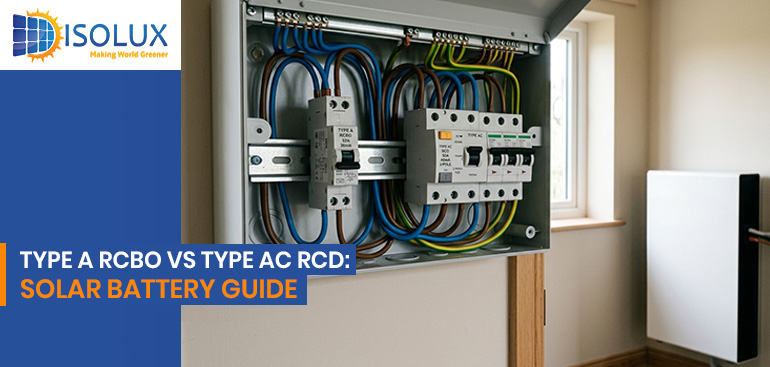

An A RCBO vs AC RCD comparison comes down to two things: what the device detects and what protection it provides. Type A devices can detect alternating and pulsating DC residual currents. Type AC devices detect only sinusoidal AC residual current.
For homes installing a Solar Battery, choosing the correct protection is important. Modern inverters and battery systems can affect the type of residual current present in an electrical circuit.
Australian electrical requirements have also changed. Type AC RCDs can no longer be installed in Australia.
What Is a Type A RCBO?
A Type A RCBO combines two forms of protection in one device.
It provides residual current protection and overcurrent protection. Therefore, it can help protect a circuit against electrical leakage and excessive current.
Type A protection can respond to alternating current and pulsating direct residual current. This makes it suitable for many modern electrical installations.
Solar inverters, batteries, EV chargers and other electronic equipment can produce residual-current characteristics that require protection beyond Type AC.
However, the exact RCD type must always follow the inverter manufacturer’s instructions and applicable electrical requirements.
What Is a Type AC RCD?
A Type AC RCD is designed to detect sinusoidal alternating residual current.
It does not provide the same detection capability as Type A for pulsating DC residual current.
Australia stopped permitting the installation of Type AC RCDs from 1 May 2023. This change followed updates to AS/NZS 3000:2018.
However, this does not mean every existing Type AC RCD must automatically be removed.
Existing devices may remain in certain circumstances. Their suitability depends on the installation, affected circuits, testing and equipment manufacturer’s requirements.
A RCBO vs AC RCD: What Is the Difference?
The easiest way to understand the difference is to separate device function from RCD type.
An RCBO combines RCD protection with circuit-breaker protection.
An RCD provides residual-current protection. It does not necessarily provide overcurrent protection by itself.
The letters Type A and Type AC describe the residual-current detection characteristics.
| Feature | Type A RCBO | Type AC RCD |
| AC residual current | Yes | Yes |
| Pulsating DC residual current | Yes | No |
| Overcurrent protection | Yes | No, unless paired with separate protection |
| New installation in Australia | Permitted where suitable | Not permitted |
| Common relevance | Modern circuits and battery systems | Existing installations |
Therefore, comparing a Type A RCBO directly with a Type AC RCD is not completely like-for-like. One describes a combined protective device, while the other describes an RCD detection type.
Why Do Solar Batteries Need the Correct RCD Protection?
Solar Batteries use power electronics and inverters.
These components can introduce residual-current characteristics that older protection may not detect correctly.
This becomes particularly important when a battery provides backup power.
During a blackout, selected household circuits can continue operating from the battery. Those circuits are then supplied by an alternative source.
NSW guidance identifies missing RCD protection on circuits supplied by a battery backup system as a non-compliant practice.
Do Solar Battery Installations Require Type A RCBOs?
There is no single rule that every battery installation must use the exact same protective device on every circuit.
The required arrangement depends on the battery system, inverter, installation design and circuits being altered.
For example, when a battery provides backup to selected circuits, those circuits require suitable RCD protection. The device type must also comply with the relevant requirements and inverter manufacturer’s instructions.
A Type A RCBO may provide both RCD and overcurrent protection for an individual circuit.
Do Existing Type AC RCDs Need to Be Replaced?
Not automatically.
Current Victorian guidance states that an existing Type AC RCD may remain in some battery installations if it has been verified to operate correctly and is a type permitted by the inverter manufacturer’s instructions.
However, a Type AC RCD must not be installed as a new replacement for a faulty device.
Therefore, your electrician should assess the actual circuit rather than replacing devices based only on their age.
Type A RCBO vs Type AC RCD: Which One Does Your Battery Need?
For a new or altered circuit, a suitable Type A device may be required instead of Type AC.
However, your battery installer should confirm the correct protection based on the complete system design.
This includes the inverter, battery, backup configuration and affected final subcircuits.
Energy Safe Victoria also recommends assessing the existing switchboard before adding a supplementary supply.
What Should You Ask Your Solar Battery Installer?
Before installation, ask which circuits will receive battery power.
Also ask which RCD or RCBO type will protect those circuits.
Confirm whether existing Type AC RCDs can remain and how the electrician will verify their operation.
Finally, ask whether any switchboard changes are included in your installation quote.
These questions can help prevent unexpected electrical work and improve your understanding of the battery system.
Conclusion
The A RCBO vs AC RCD difference is important because Type A protection can detect residual currents that Type AC devices cannot.
For Solar Battery installations, the correct protection depends on the system design, inverter requirements and affected circuits.
Type AC RCDs cannot be newly installed in Australia, although suitable existing devices may remain in specific circumstances. Therefore, always have a licensed electrician assess your switchboard and confirm the correct protection before installing a Solar Battery.