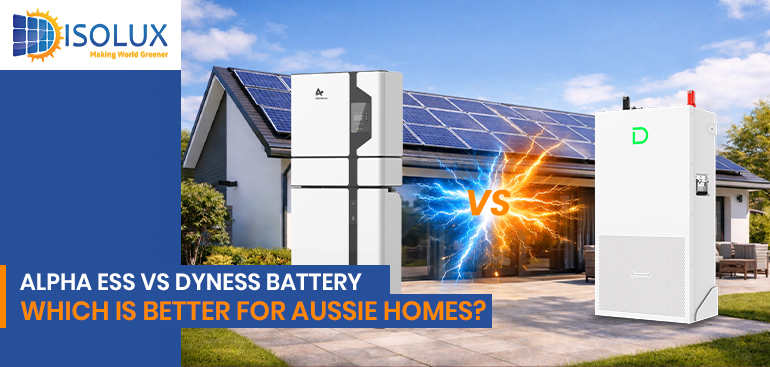

Solar batteries have become an essential upgrade for homeowners who want to reduce their energy bills, increase their energy independence and make better use of their solar systems. As electricity prices continue to rise across Australia, choosing the right battery can make a big difference in long-term savings. Two popular options on the market are Alpha ESS and Dyness, both known for reliable performance and advanced LFP technology. This comparison will help you decide which one suits your home and energy needs.
Overview of Alpha ESS and Dyness Brands
Alpha ESS is a global leader in home energy storage solutions. The brand is popular in Australia for its well-integrated hybrid systems and premium-quality engineering. Many Alpha ESS models include built-in inverters, smart monitoring and sleek designs that blend easily into modern homes.
Dyness has made a strong impact in Australia by offering modular, affordable and highly customizable battery storage solutions. Its stackable design allows homeowners to start small and expand storage over time, making it ideal for growing families or those planning future upgrades like EV charging.
Both brands are trusted in the Australian market, but their strengths cater to different types of homeowners.
Battery Technology and Chemistry Explained
Both Alpha ESS and Dyness use Lithium Iron Phosphate (LiFePO4 or LFP) battery technology. LFP is known for its outstanding safety, long lifespan and excellent thermal performance. This chemistry performs well in Australia’s varying climate, from hot regions such as Queensland and Perth to cooler zones like Victoria and Tasmania.
LFP batteries also degrade more slowly than older lithium-ion chemistries, ensuring that homeowners enjoy reliable storage for many years without significant performance loss.
Capacity, Modularity and Scalability Compared
Alpha ESS batteries usually come in fixed-capacity configurations, making them ideal for homeowners who prefer complete, pre-integrated systems. Some Alpha solutions do support expansion but within limits based on compatible models.
Dyness batteries are fully modular, which is one of their biggest advantages. Homeowners can begin with a 5 kWh unit and later expand to 10, 15 or even 20+ kWh. This flexibility is ideal for families with changing electricity needs, especially those planning for an electric vehicle or additional solar panels in future.
Performance Metrics: Efficiency, Charge Rate and Depth of Discharge
Performance plays a major role when choosing the right solar battery. Alpha ESS offers strong round-trip efficiency, typically between 90 and 95 percent. This means very little energy is lost when storing and using solar power.
Dyness also delivers high performance, often offering a slightly higher Depth of Discharge (DoD) depending on the model. A higher DoD means more usable stored energy each day, which can be especially beneficial during evening peak times.
Both brands support fast charging from solar systems and work efficiently with common system sizes such as 6.6 kW and 10 kW solar setups.
Warranty, Lifespan and Cycle Life: Long-Term Value
Alpha ESS batteries generally include warranties ranging from 10 to 15 years, depending on the model. Their premium lineup gives homeowners confidence in long-term performance.
Dyness batteries usually come with a 10-year warranty combined with excellent cycle life. Thanks to LFP chemistry, both brands offer strong longevity, although some Alpha ESS models include enhanced protections that may extend usable lifespan.
Cost Considerations: Upfront Price and Value for Money
Alpha ESS batteries fall into the mid to premium pricing category because they are designed as integrated energy storage solutions with advanced monitoring and smart system controls. Homeowners who want a premium experience often choose Alpha ESS.
Dyness batteries tend to be more budget-friendly and provide excellent value for money. Their modular design also makes it easier for homeowners to expand their system gradually without a large upfront investment.
Installation, Compatibility and Inverter Pairing
Alpha ESS systems work best with their own hybrid inverters, ensuring a smooth, unified setup. They can also work with certain third-party inverters, but compatibility should always be checked before installation.
Dyness batteries have broad compatibility with many popular inverter brands in Australia, including GoodWe, Sungrow, Solis, Victron and others. This makes Dyness a strong choice for homeowners who already have an existing solar system and want to add a battery later.
Isolux Solar installs both Alpha ESS and Dyness battery systems and can assess your home’s energy usage to recommend the ideal match.
You may also find this guide helpful: Dyness Battery Review Australia
Safety, Certifications and Local Support Availability
Both Alpha ESS and Dyness meet Australian safety standards and hold key certifications required for home battery installations. Their use of LFP chemistry significantly lowers the risk of overheating, making them safe for garages, outdoor spaces and utility rooms.
Alpha ESS has an established support presence within Australia, offering responsive warranty and service channels. Dyness continues to expand its local support network through Australian distributors and authorised installers.
You might also like: Alpha ESS Solar Battery Review
Alpha ESS vs Dyness Battery: Side-by-Side Comparison Table
| Feature | Alpha ESS Battery | Dyness Battery |
| Battery Chemistry | Lithium Iron Phosphate (LFP) | Lithium Iron Phosphate (LFP) |
| System Type | All-in-one or semi-integrated | Fully modular and stackable |
| Usable Capacity Range | 10 to 13.3 kWh (model dependent) | 5 kWh modules expandable to 10, 15, 20+ kWh |
| Scalability | Limited depending on model | Highly scalable and easy to expand |
| Round-Trip Efficiency | Around 90–95% | Around 90–95% |
| Depth of Discharge | Up to 90–95% | Up to 95% or higher based on model |
| Cycle Life | 6,000+ cycles | 6,000+ cycles |
| Warranty | 10 to 15 years | 10 years |
| Price Category | Mid to premium | Budget to mid-range |
| Inverter Compatibility | Best with Alpha inverters | Works with many inverter brands |
| Ideal For | Homeowners wanting an integrated premium system | Homeowners wanting affordable expansion |
| Local Support | Strong network | Growing network |
Which Battery Is Better for Your Home?
The best choice between Alpha ESS and Dyness depends on your energy goals.
Alpha ESS is ideal if you want a premium, unified system with built-in features and advanced energy management. Its pre-integrated design makes installation smooth and aesthetically appealing.
Dyness is the better choice for homeowners looking for affordability and flexibility. Its modular system allows you to expand storage whenever your household demands increase, making it one of the most future-proof options available in the Australian market.
Isolux Solar can help you determine the most suitable battery based on your home’s consumption patterns, solar size and long-term plans.
Best Solar Batteries in Australia for 2026
Ready to Add a Solar Battery to Your Home? Choose Isolux Solar and Start Saving
Adding a battery is one of the smartest upgrades you can make to your solar system. Whether you want the premium integration of Alpha ESS or the modular freedom of Dyness, the Isolux Solar team will guide you through selection, installation and after-sales support.
Get your free solar battery quote today.