
Australia is leading one of the world’s fastest transitions to rooftop solar and home battery storage — and Virtual Power Plants (VPP) have become a major part of that evolution. As more households install batteries to maximise their solar savings, energy retailers and grid operators are increasingly relying on VPPs to stabilise the grid, manage peak demand and make renewable energy more reliable.
For homeowners, VPPs present a new opportunity: instead of letting your battery sit idle, you can get paid for letting a VPP access your stored energy during high-demand or high-price events. But every VPP is different — payment structures, battery control, terms, incentives and real-world performance vary significantly across the Australian market.
This makes understanding how VPPs work, comparing the top providers, and evaluating the pros and cons essential before joining any program.
What Is a Virtual Power Plant (VPP)?
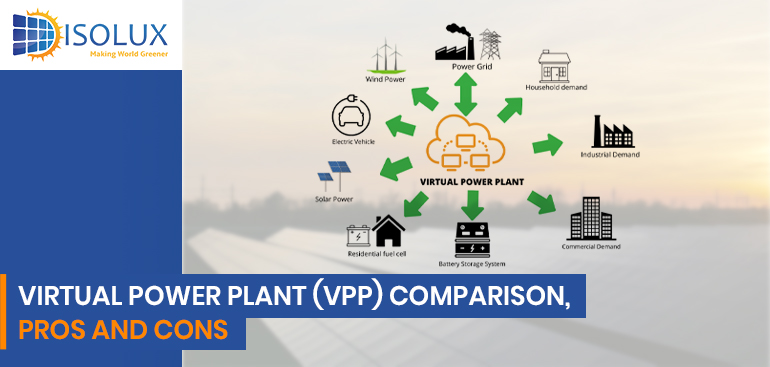
A Virtual Power Plant (VPP) is a network of distributed energy resources—mainly home solar systems, batteries, EV chargers, and smart appliances—that are digitally connected and controlled to operate like a single, coordinated power plant. Instead of relying on one large generator, a VPP uses thousands of small energy systems across homes and businesses to supply power, support the grid, and respond to market conditions.
Here’s how it works in simple terms:
- You have solar panels that generate electricity during the day.
- Your battery stores excess solar energy for evening use.
- When you join a VPP, your battery becomes part of a much bigger aggregated fleet.
- Advanced software can temporarily draw small amounts of energy from your battery—or adjust its charging—to stabilise the grid during peak demand or emergencies.
- In return, you receive financial benefits, which may include bill credits, higher feed-in rates, event-based payments, or battery discounts.
Why VPPs Are Growing Rapidly in Australia
Australia’s grid is experiencing more renewable energy than ever before, and with that comes challenges like midday oversupply and evening peaks. VPPs help balance these fluctuations by providing fast, reliable energy when the grid needs it most. At the same time, they allow homeowners to earn extra value from their existing solar + battery systems.
Key Benefits of a VPP
- Smarter use of stored solar energy
- Improved grid stability and reduced blackouts
- Opportunities to earn additional income
- Faster transition toward clean, decentralised energy
How to Choose the Right Virtual Power Plant (VPP)
Choosing a VPP isn’t just about picking the one that pays the most. Each provider has different rules, payment structures, compatibility requirements, and levels of battery control. The right VPP for you depends on your system, your energy usage, and how much flexibility you’re comfortable giving up.
Here’s a clear, practical guide to help you choose the best VPP for your home.
1. Understand Your Priority: Backup Power vs Earnings
Before comparing providers, start with your goal:
- If backup power during outages is essential, choose a VPP that allows you to set a high minimum reserve or one that only dispatches your battery during major grid events.
- If you want maximum financial return, pick a VPP with event-based payments or wholesale market participation, which usually pays more—but may discharge your battery more often.
2. Check Battery & Inverter Compatibility
Not every battery works with every VPP. Most programs support popular systems like Tesla Powerwall, Sungrow, SolarEdge, and Alpha-ESS, but some are brand-restricted.
Before signing up, confirm:
- Whether your battery model is supported
- Whether additional hardware (like a gateway) is required
- Whether firmware upgrades are needed
- Minimum battery capacity requirements (some VPPs require 5 kWh or more)
3. Compare Payment Structures
Each VPP pays differently. The most common options include:
- Monthly bill credits – predictable but usually lower
- Event-based payments – high payouts during peak price or emergency events
- Wholesale profit sharing – variable, but strong during market volatility
- Battery purchase discounts – upfront savings when you buy a new battery
Make sure you calculate your realistic yearly benefit, not just the best-case scenario advertised.
4. Review Control & Battery Reserve Settings
Every VPP has rules about how much control you keep:
- Some programs may discharge your battery daily
- Some only use it during emergencies
- Others allow you to set a personal minimum State of Charge (SoC), ensuring your battery never drops below a chosen level
Your comfort with these settings will determine whether a VPP suits your lifestyle.
5. Check Contract Terms, Lock-ins & Exit Fees
VPP rules vary widely:
- Some require you to join their electricity retailer
- Some have 12–36 month lock-in periods
- Some charge exit fees
- Some offer “opt-out anytime” flexibility
If you plan to move homes, switch retailers, or upgrade your battery, make sure the program is easy to leave.
6. Demand Transparency & Reporting
A good VPP should give you clear insights, including:
- When your battery was dispatched
- How much energy was used
- How much you earned from each event
- Monthly or annual summaries
If the provider does not offer transparent reporting, it may be difficult to track your true return on investment.
7. Estimate Realistic Earnings
Many homeowners overestimate VPP income. A typical home battery (10–13 kWh) might earn:
- Around $100–$400 per year from standard participation
- Much more during rare high-price events, depending on the VPP
Always calculate your return using conservative numbers and compare it to your battery cost or payback period.
Virtual Power Plant (VPP) Comparison Table (Australia)
Below is a clear, reader-friendly comparison of Australia’s leading VPP programs.
| VPP Provider | Payment Type | Control Over Battery | Contract / Lock-In | Battery Compatibility | Best For |
| Amber Electric – SmartShift | Event-based earnings + wholesale price optimisation | Medium control (frequent dispatch possible) | No long lock-ins | Tesla Powerwall, SolarEdge, Sungrow, Enphase (selected models) | Homeowners wanting high earning potential from price spikes |
| AGL VPP | Monthly bill credits + joining bonus | Low to moderate control | Varies by plan | Broad compatibility (BYO battery supported) | Users wanting simplicity + a large, stable retailer |
| Origin Loop VPP | Bill credits + event payments | Moderate control | Usually tied to Origin plans | Selected brands; check model-specific list | Existing Origin customers seeking easy onboarding |
| EnergyAustralia PowerResponse | Flat monthly credits | Low control / predictable dispatch | Usually no long lock-in | Many mainstream systems | Households preferring predictable earnings over volatility |
| Discover Energy VPP | Higher feed-in + event payments | Medium to high control depending on settings | Usually 12–24 months | Sungrow, AlphaESS, GoodWe, Powerwall | Customers wanting competitive FiTs + active VPP participation |
| ShineHub VPP | Battery purchase discounts + performance payments | Medium control | Often tied to battery financing or product bundles | Primarily Alpha-ESS and selected models | Buyers purchasing a brand-new battery to reduce upfront cost |
| Tesla VPP (State-based programs) | Annual credits or event-based rewards | Medium control | Varies by state program | Tesla Powerwall only | Powerwall owners wanting easy integration and performance |
Other Virtual Power Plant (VPP) Providers in Australia
Aside from the major programs listed above, Australia has a growing number of regional and specialised VPP providers. These may offer unique advantages for certain battery types, locations, or performance requirements.
1. SolarEdge VPP (via selected retailers)
Best for: Homes with SolarEdge batteries or inverters
- Integrates seamlessly with SolarEdge Home Battery systems
- Often offers dynamic control, advanced monitoring, and sometimes bonus FiTs
- Availability varies by electricity retailer and region
2. Evergen VPP (Energy Management Platform)
Best for: Homeowners prioritising energy optimisation
- Uses advanced AI to optimise solar, battery, and VPP participation
- Works with several battery brands
- Often layered into retailer-backed VPP programs rather than standalone
3. Redback Technologies VPP
Best for: Integrated Redback solar + battery systems
- Offers VPP-ready hardware
- Regional availability varies
- Occasional incentives for joining via retailer partners
4. SENEC.Cloud / SENEC.VPP (Limited Regions)
Best for: SENEC battery owners
- Offers unique solar “cloud” credits + VPP features
- Region-specific availability, often in trials
5. Local Council or Distribution Network VPPs
Examples include:
- SA Government VPP initiatives (e.g., earlier SA VPP programs)
- NSW community battery trials
- QLD & WA hosting network-led VPP pilots
These often offer attractive incentives, but may be limited to trial zones.
6. Smaller Retailer-Backed VPPs
Some retailers occasionally launch VPPs for specific battery brands or customer groups, such as:
- Simply Energy VPP programs
- Diamond Energy’s battery optimisation programs
- OVO Energy (past pilot programs)
These come and go but may offer highly competitive terms for early adopters.
Pros of a Virtual Power Plant (VPP)
Joining a VPP can offer multiple financial, environmental, and operational benefits depending on your battery size, solar generation, and the program you choose. Here are the strongest advantages:
1. Earn Extra Income From Your Battery
A VPP allows you to monetise your stored solar energy. You can earn through:
- Event-based payments during high-demand or high-price grid events
- Monthly bill credits
- Higher export rates (in some programs)
- Sharing profit from the wholesale market
For many households, this can add $100–$400 per year or more during volatile energy periods.
2. Faster Payback on a Solar Battery
By stacking VPP credits with solar savings, you reduce the overall payback period of your battery investment.
Some VPPs also offer upfront battery discounts or rebates, giving homeowners an instant head start.
3. Support Grid Stability & Renewable Energy Adoption
VPPs help the Australian grid balance solar oversupply, manage evening peaks, and reduce blackouts.
By participating, your battery becomes part of a cleaner, more reliable energy system — contributing to the national energy transition.
4. Smarter Use of Stored Solar Energy
Instead of your battery simply sitting full during the day, a VPP dispatches excess energy at times when it has the highest value, maximising your battery’s usefulness.
5. Access to Exclusive Incentives & Smart Plans
Some VPPs offer:
- Bonus FiTs
- Lower electricity rates
- Government-backed incentives
- Priority access to new battery technologies
These additional rewards can significantly improve the economics of battery ownership.
6. Better Integration With Smart Appliances & EVs
Advanced VPPs integrate with smart chargers, heat pumps, and EV chargers to optimise your entire home’s energy usage — lowering bills even further.
Cons of a Virtual Power Plant (VPP)
While VPPs provide great advantages, they’re not perfect for everyone. Understanding the limitations helps you choose the right program.
1. Reduced Control Over Your Battery
The biggest drawback is that the VPP can access and discharge your battery during events.
This means:
- You may have less stored energy during certain times
- You may have reduced backup capacity during unplanned outages
Some VPPs allow you to set a minimum reserve, but not all.
2. Earnings Can Be Unpredictable
Even though some programs promote high payouts, actual earnings depend on:
- Electricity market volatility
- Frequency of dispatch events
- Your battery size
- Your solar generation
In quiet grid periods, income can be minimal.
3. Contract Lock-In & Retailer Restrictions
Some VPPs require:
- Joining a specific electricity retailer
- 12–36 month lock-in contracts
- Exit fees
- Special metering or monitoring equipment
If you switch retailers often or plan to move, these may not suit you.
4. Increased Battery Cycling
Some VPPs may cycle your battery more frequently, which can theoretically accelerate battery wear.
Most modern lithium-ion batteries can handle this, but you should check:
- Throughput warranty
- Cycle warranty
- Whether the VPP compensates for extra wear
5. Compatibility Limitations
Not all batteries or inverters are supported.
If you have a less common model, you may be limited to only one or two VPP options — or none.
6. Transparency Varies Between Providers
Some VPPs offer excellent dashboards and reporting.
Others offer minimal insight into:
- When your battery is used
- How much you earn
- Real-time event data
This lack of transparency may make it hard to evaluate performance.
Conclusion
Virtual Power Plants are reshaping how Australian homes use and share energy. By joining a VPP, your solar battery can earn extra income, support grid stability, and improve the overall value of your system. However, not every VPP suits every household. Your battery type, energy habits, and preference for control all play an important role in choosing the right program.
If you’re unsure which VPP offers the best return for your home, expert guidance can make all the difference.
Ready to Maximise Your Battery’s Potential?
Isolux Solar can help you compare VPP options, check your system’s compatibility, and estimate your real earnings. Our team provides clear, personalised advice so you can make a confident decision.
Contact Isolux Solar today for a free VPP assessment and consultation.