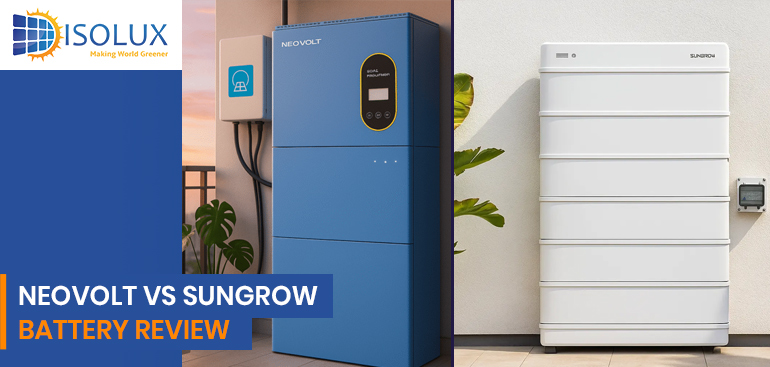

Choosing a home battery in Australia is no longer just about storing excess solar energy. With electricity prices climbing, feed-in tariffs shrinking, and grid reliability becoming less predictable, a battery is now a long-term financial and lifestyle decision. Two names that frequently appear in Australian quotes and homeowner discussions are NeoVolt and Sungrow.
At first glance, the comparison seems straightforward: NeoVolt often looks cheaper, while Sungrow carries a stronger brand reputation. But real value is rarely determined by price alone. It comes from reliability, warranty confidence, system integration, after-sales support, and how well the battery performs in real Australian homes over 10+ years.
This in-depth comparison is written in Isolux Solar’s editorial, trust-driven tone to help homeowners make an informed, future-proof decision.
Why Battery “Value” Matters More Than Battery Price
Many homeowners initially ask: “Which battery is cheaper?”
The better question is: “Which battery will deliver the most value over its lifetime?”
True battery value depends on:
- How much usable energy you actually get
- Whether the system integrates cleanly with your inverter and solar array
- Long-term degradation and warranty protection
- Manufacturer stability and local support
- Performance during peak loads and blackouts
This is where NeoVolt and Sungrow begin to separate.
Brand Overview: NeoVolt vs Sungrow
NeoVolt
NeoVolt has gained attention largely because of aggressive pricing. It appeals to homeowners looking for a lower upfront investment and a straightforward battery solution without premium branding.
NeoVolt batteries are typically marketed as:
- Affordable LFP (lithium iron phosphate) systems
- Simple, modular designs
- Suitable for standard residential energy storage needs
However, NeoVolt is still establishing its long-term presence in Australia. While early adopters may benefit from lower prices, the brand does not yet have the extensive track record of larger manufacturers.
Read NeoVolt Battery Review.
Sungrow
Sungrow is a globally established energy technology company with a strong footprint in Australia, particularly in solar inverters. Its batteries are designed to integrate tightly with its inverter ecosystem.
Sungrow’s strengths include:
- Long-term global manufacturing scale
- Strong installer and distributor support in Australia
- Conservative specifications backed by solid warranties
For homeowners who value predictability and long-term brand stability, Sungrow carries considerable weight.
Read Sungrow Battery Review.
Battery Technology & System Design
Both NeoVolt and Sungrow use Lithium Iron Phosphate (LFP) chemistry, which is now the preferred standard for residential batteries due to its thermal stability and long cycle life.
Key Design Differences
- NeoVolt systems are typically modular, allowing capacity expansion later.
- Sungrow offers both modular and integrated solutions depending on the model.
Sungrow systems tend to feel more “ecosystem-driven,” meaning they perform best when paired with Sungrow inverters. NeoVolt, on the other hand, is often promoted as a more flexible, price-driven option.
Capacity, Power Output & Usable Energy
This is where marketing figures often mislead homeowners. What matters is usable capacity, not headline numbers.
Typical Residential Options in Australia
| Feature | NeoVolt Battery | Sungrow Battery |
| Typical Capacity Range | ~10–15 kWh | ~9.6–16 kWh |
| Usable Capacity | ~90–95% | ~90–95% |
| Continuous Power | Moderate | Higher, more stable |
| Peak Load Handling | Standard household | Better for high-load homes |
Sungrow batteries generally deliver stronger sustained power output, making them better suited for homes with:
- Larger air-conditioning systems
- EV chargers
- Higher evening energy demand
NeoVolt is sufficient for households with predictable, moderate usage.
Warranty, Lifespan & Degradation
Warranty is where long-term value becomes crystal clear.
Warranty Comparison
| Aspect | NeoVolt | Sungrow |
| Product Warranty | ~10 years | 10 years |
| Performance Warranty | Yes | Yes |
| Cycle Guarantee | Lower disclosure | Clearly defined |
| End-of-Warranty Capacity | ~60–70% | ~60–70% |
While both offer similar headline warranty terms, Sungrow is generally more transparent with degradation curves and cycle limits. This transparency matters because warranties are only as good as the manufacturer’s willingness and ability to honour them over time.
For homeowners planning to stay in their home for 10–15 years, this factor alone often tilts the decision toward Sungrow.
Safety Standards & Certifications
Both brands comply with Australian battery safety requirements, including:
- AS standards
- Built-in battery management systems
- Over-temperature and over-current protection
However, Sungrow benefits from broader installer and insurer acceptance due to its longer presence in the Australian market. This can simplify approvals and insurance discussions, especially in stricter councils or strata properties.
Inverter Compatibility & System Integration
This is one of the most overlooked aspects of battery value.
NeoVolt Compatibility
NeoVolt batteries are typically compatible with selected hybrid inverters and third-party systems. While this offers flexibility, integration quality can vary depending on the inverter brand and installer experience.
Sungrow Compatibility
Sungrow batteries are optimised for Sungrow hybrid inverters. This tight integration results in:
- Better communication between battery and inverter
- More accurate energy monitoring
- Improved system efficiency and stability
For Sungrow inverter owners, choosing a Sungrow battery is often the most seamless and reliable option.
Monitoring, App Experience & Smart Features
Homeowners increasingly expect their battery system to be as intuitive as their smartphone.
NeoVolt App Experience
- Basic monitoring features
- Solar, battery, and grid visibility
- Functional but not particularly refined
Sungrow App Experience
- Detailed real-time monitoring
- Clear historical data
- Reliable performance and frequent updates
Sungrow’s monitoring platform is widely regarded as more stable and informative, particularly for homeowners interested in optimising usage patterns or time-of-use tariffs.
NeoVolt vs Sungrow Battery Price in Australia
Pricing varies by installer and site conditions, but the following ranges reflect typical installed prices.
Installed Price Comparison
| Battery | Approx Installed Price | Cost per Usable kWh |
| NeoVolt (10–15 kWh) | Lower upfront | Cheaper |
| Sungrow (9.6–16 kWh) | Higher upfront | Moderate |
NeoVolt clearly wins on upfront cost. Sungrow, however, often delivers better lifetime value when reliability, integration, and long-term support are factored in.
Real-World Feedback from Australian Homeowners
Australian homeowners discussing these batteries in forums and community groups often highlight similar themes.
NeoVolt Feedback
- Attractive pricing
- Generally satisfactory performance
- Some uncertainty around long-term support
Sungrow Feedback
- Consistent performance
- Strong installer backing
- Reliable warranty handling
Installers frequently note that Sungrow systems generate fewer post-installation support calls, which is often a quiet but powerful indicator of product maturity.
Which Battery Actually Delivers More?
The “best” battery depends on how you use energy, how long you plan to stay in your home, and your risk tolerance.
NeoVolt Offers Better Value If:
- Budget is the primary concern
- You want the lowest upfront cost
- Your household energy use is stable and predictable
Sungrow Offers Better Value If:
- You plan to stay long-term
- You have higher energy demands or future EV plans
- You value system reliability and strong manufacturer backing
Who Should Choose NeoVolt?
NeoVolt makes sense for homeowners who want to reduce grid dependence without stretching their budget. It’s suitable for smaller households or those comfortable trading some long-term certainty for immediate cost savings.
Who Should Choose Sungrow?
Sungrow is better suited for homeowners who see their battery as a long-term infrastructure investment. If reliability, performance under load, and after-sales confidence matter to you, Sungrow is usually the safer choice.
Conclusion
NeoVolt wins on price, but Sungrow wins on confidence.
If your goal is to enter battery storage at the lowest cost, NeoVolt is a compelling option. But if you’re looking for long-term value, smoother integration, and a brand with proven staying power in Australia, Sungrow delivers stronger overall value despite the higher upfront investment.
Isolux Solar consistently advise homeowners to think beyond price and focus on how a battery will perform and be supported over its full lifespan.
Request a free solar quote now.
Also Read:
Is Upgrading from 6.6kW to 10kW Solar System Worth It?
FAQs
Is NeoVolt reliable in Australia?
NeoVolt systems generally perform well, but the brand has a shorter local track record compared to Sungrow.
Is Sungrow worth the extra cost?
For many homeowners, yes—especially those prioritising reliability and long-term support.
Which battery works better with a 6.6kW or 10kW solar system?
Both can work, but Sungrow integrates more seamlessly with Sungrow hybrid inverters.
Which battery is better for blackouts?
Sungrow typically offers stronger backup performance and system stability during outages.