
Australia’s solar journey has matured. With feed-in tariffs shrinking and grid reliability under pressure, homeowners are asking a smarter question than ever before: which battery actually makes sense for my home and budget? In that conversation, the ESY Sunhome battery is appearing more frequently—often as a value-driven alternative to premium brands.
Let’s look at how ESY Sunhome performs in real-world conditions, how it compares on price and reliability, and who it’s best suited for—drawing on installer experience from Isolux Solar.
About ESY Sunhome Battery
ESY Sunhome is an international energy-storage manufacturer focused on residential and light commercial systems. While it doesn’t yet have decades of brand recognition in Australia, it follows modern battery design principles that Australian buyers now expect—safe chemistry, modular expansion, and compliance with international standards.
In the local market, ESY Sunhome sits comfortably in the mid-range category. It isn’t trying to out-market premium batteries on brand prestige. Instead, it appeals to homeowners who want dependable solar energy storage, modern safety features, and sensible pricing without unnecessary extras.
ESY Sunhome Battery Systems Available in Australia
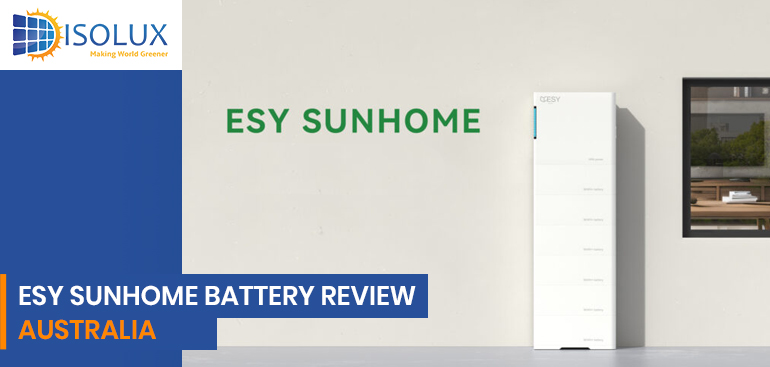
Rather than offering a single fixed-size unit, ESY Sunhome uses a modular system architecture. This allows households to install a smaller battery initially and expand later as energy needs change. For many Australian families—especially those considering EV ownership or full home electrification—this flexibility matters.
The system is suitable for both single-phase and three-phase homes, and depending on the configuration, it can be installed indoors or outdoors. This adaptability makes it easier to integrate into Australian homes where garage space, wall access, or outdoor placement can vary significantly.
Technical Overview
Below is an overview of the typical ESY Sunhome battery specifications (exact figures vary by model):
Battery Chemistry
- Lithium Iron Phosphate (LiFePO₄ / LFP)
- Known for safety, thermal stability, and long lifespan
Capacity & Scalability
- Modular capacities, typically starting around 5–10 kWh
- Expandable for medium to large households
Usable Capacity
- High usable capacity due to deep discharge capability
Depth of Discharge (DoD)
- Up to 90–95% DoD, allowing you to use most of the stored energy
Power Output
- Designed to support common household loads
- Suitable for essential circuits and partial whole-home backup
Efficiency
- Competitive round-trip efficiency in the 90%+ range
IP Rating
- Designed for Australian conditions, with weather-resistant enclosures suitable for outdoor installation
Performance in Australian Conditions
Australia’s climate can be demanding on battery systems, especially during hot summers. ESY Sunhome batteries are engineered to perform reliably across a wide temperature range.
Heat Tolerance
LFP chemistry performs better in high temperatures compared to older lithium battery types—making ESY Sunhome suitable for Australian garages and shaded outdoor installations.
Blackout Protection
When paired with a compatible hybrid inverter, ESY Sunhome batteries can provide backup power during grid outages, keeping essential appliances running.
Solar Optimisation
The system stores excess daytime solar energy for evening use, helping homeowners:
- Reduce grid reliance
- Maximise solar self-consumption
- Lower electricity bills
ESY Sunhome Battery Price in Australia (2025)
One of the biggest reasons Australians consider ESY Sunhome is price.
Indicative Pricing (AUD)
- Battery only: approx. $5,500 – $8,500
- Installed system: approx. $8,000 – $12,000+
Installed costs vary depending on capacity, inverter choice, backup requirements, and site conditions. Larger systems with three-phase compatibility or switchboard upgrades will naturally sit at the higher end of the range. Even so, ESY Sunhome generally delivers strong value per kilowatt-hour, particularly for families focused on bill reduction rather than brand prestige.
From an installer’s perspective, the price-to-performance ratio is one of the reasons ESY Sunhome is increasingly considered for value-focused households.
Warranty, Lifespan, and Long-Term Reliability
ESY Sunhome batteries typically come with a 10-year product warranty, aligning with industry expectations for modern lithium batteries. Performance warranties are structured around cycle life and retained capacity, ensuring the battery continues to deliver usable energy over time.
Thanks to LFP chemistry, cycle life expectations are high—often exceeding 6,000 cycles under standard operating conditions. For most households, this translates to well over a decade of daily use. With proper installation, adequate ventilation, and sensible energy management, the battery’s lifespan can comfortably align with the working life of the solar system itself.
Inverter Compatibility & System Integration
ESY Sunhome batteries work best with compatible hybrid inverters, allowing seamless energy management between solar panels, battery storage, and the grid.
Key Integration Features:
- Supports both AC-coupled and DC-coupled configurations (model-dependent)
- Real-time monitoring via mobile or web apps
- Smart energy prioritisation (solar → battery → grid)
Isolux Solar ensures full compatibility checks before installation, preventing performance or warranty issues.
Pros and Cons of the ESY Sunhome Battery
Pros
- Competitive pricing for Australian households
- Safe, stable LFP battery chemistry
- Modular and expandable design
- Suitable for hot Australian climates
- Solid warranty for its category
Cons
- Shorter track record in Australia than premium brands
- Smaller installer and support footprint
- Monitoring software is functional rather than premium
ESY Sunhome Compared With Other Batteries in Australia
When compared with the Tesla Powerwall, ESY Sunhome is significantly more affordable but lacks Tesla’s brand recognition and polished software ecosystem. Tesla suits homeowners seeking a premium, all-in-one experience, while ESY Sunhome appeals to those prioritising value.
Against the BYD Battery-Box, ESY Sunhome competes closely on chemistry and modularity, often winning on upfront price depending on configuration.
Compared to the Sungrow Battery, ESY Sunhome offers similar practicality, with Sungrow holding a slight edge in inverter integration for some setups.
Is ESY Sunhome the Right Battery for Your Home?
ESY Sunhome is particularly well suited to Australian households that want to reduce electricity bills, increase energy independence, and avoid premium pricing. It works well for medium to large homes, families planning future energy upgrades, and homeowners installing solar and battery together.
Those seeking the most advanced software features, longest local track record, or whole-home backup with high surge loads may prefer premium alternatives. The right choice ultimately depends on priorities, not just specifications.
Expert Verdict from Isolux Solar
From a practical, installer-led perspective, ESY Sunhome represents a sensible, future-ready battery choice for Australian homes. It doesn’t rely on hype or branding. Instead, it delivers solid engineering, safe chemistry, and strong value—qualities that matter most over the long term.
For homeowners focused on performance per dollar, ESY Sunhome is a battery worth serious consideration.
Why Install ESY Sunhome with Isolux Solar?
Isolux Solar designs battery systems based on real household usage, not one-size-fits-all packages. With SAA-accredited installers, transparent pricing, and end-to-end support, homeowners get a system that performs as promised—year after year.
Conclusion
The ESY Sunhome Battery isn’t trying to be the flashiest option on the market. Instead, it offers Australian homeowners something more valuable: reliable storage, modern safety, and excellent value. For many households, that balance makes it one of the smartest battery choices available in 2026.
Speak with Isolux Solar today to see whether ESY Sunhome is the right fit for your home.
FAQs
Is ESY Sunhome a good battery in Australia?
Yes. ESY Sunhome offers safe LFP chemistry, modular expansion, and competitive pricing, making it a strong mid-range option for Australian homes.
How much does an ESY Sunhome battery cost in Australia?
Installed systems typically range from the mid to high four figures, depending on capacity, inverter choice, and installation requirements.
Does ESY Sunhome provide blackout protection?
When paired with a compatible hybrid inverter, ESY Sunhome can supply backup power to essential household circuits during outages.
What warranty does ESY Sunhome offer?
Most systems include a 10-year product warranty, with performance guarantees based on cycle life and retained capacity.
Is ESY Sunhome better than Tesla Powerwall?
ESY Sunhome is more affordable, while Tesla Powerwall offers a premium software ecosystem. The better choice depends on budget and priorities.